Let Us Not Merely Dream of the Christianity of the Future – A Summit of Church-Builders in Austria
The age of the Godfluencers and episcopal coaching has arrived; secularization is not an enemy but an opportunity; more and more women may take on leadership positions in the Church; and, at the same time, the Church needs more silence. Staff members of Megujul.hu also took part in the European synodal gathering held in Austria from September 14 to 17.
Author: István Gégény
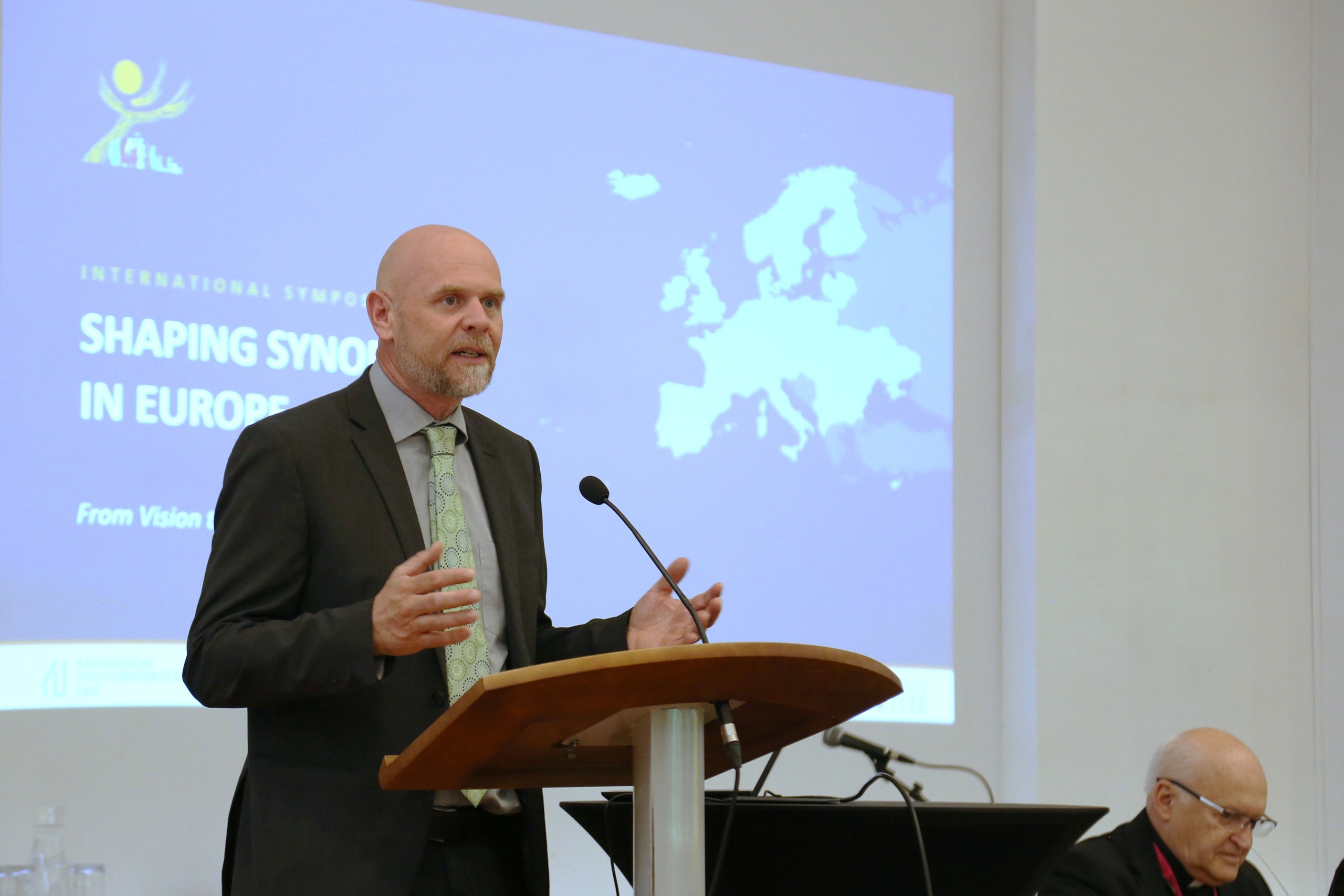
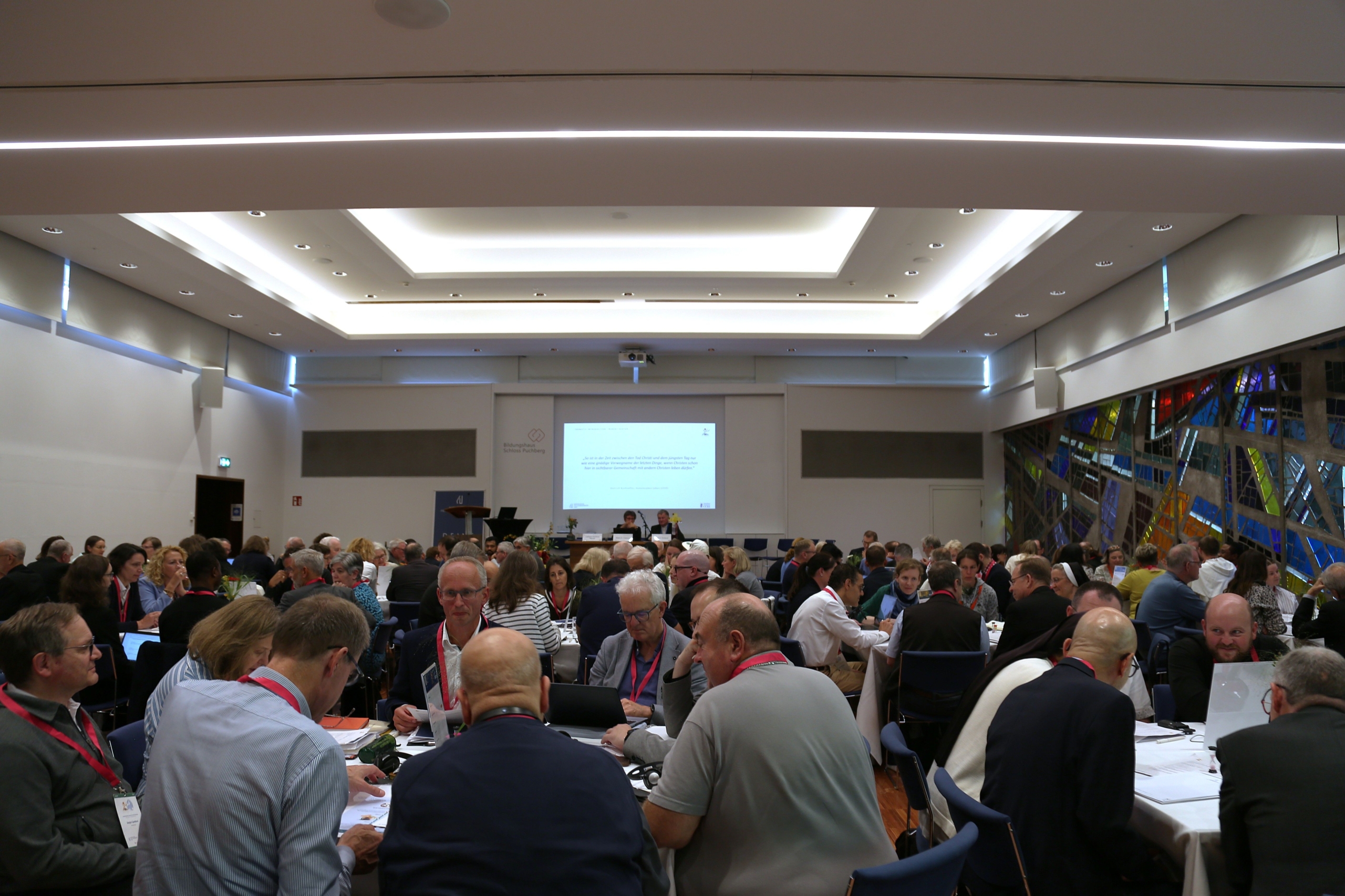
The process of synodal renewal launched by Pope Francis in 2021 is moving forward at a steady pace. Following the conclusion of the Synod of Bishops in the autumn of 2024, it has now entered its implementation phase. As part of this practical process of Church development, which will continue until 2028, a European synodal symposium was held in Austria, at the Puchberg formation centre.
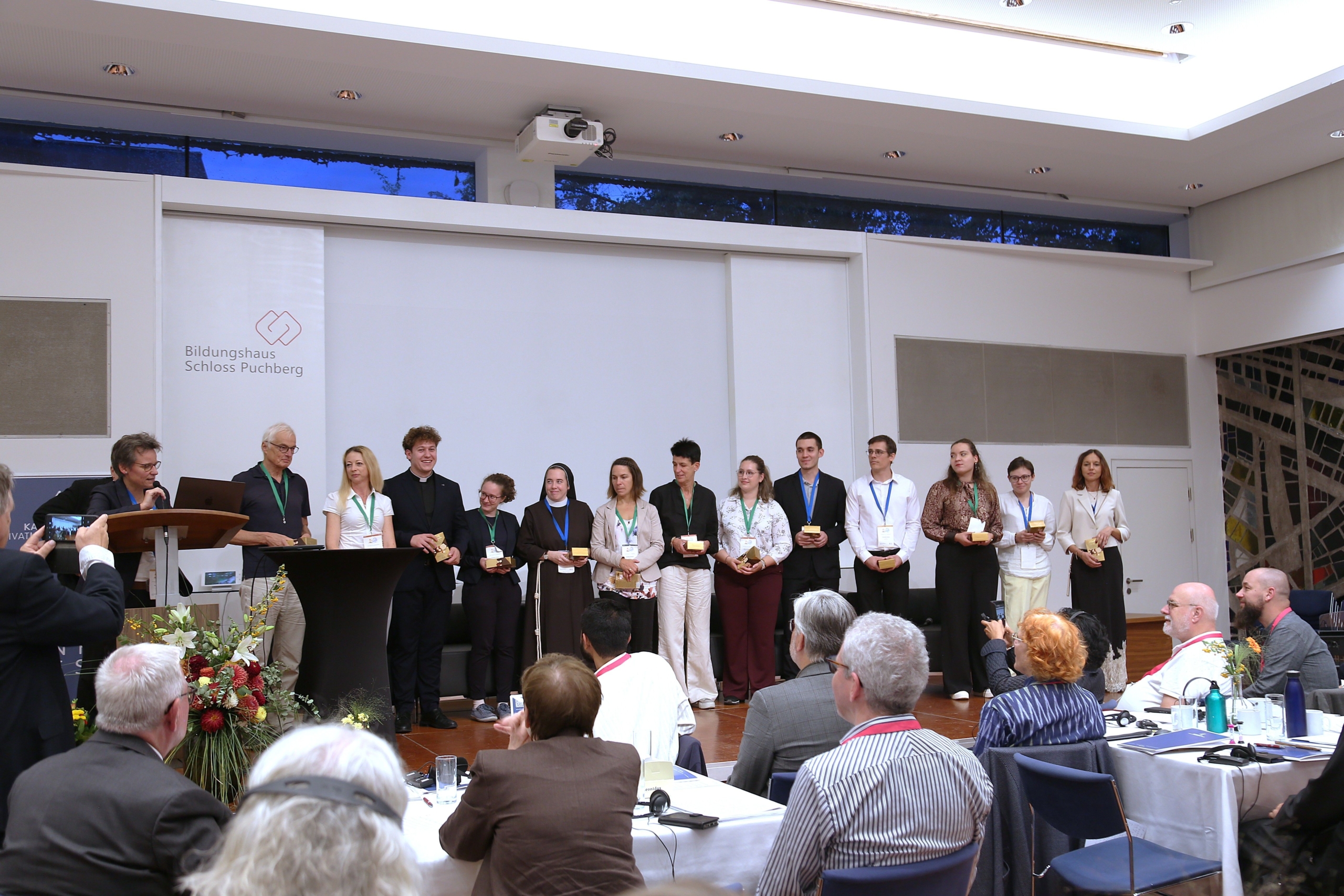
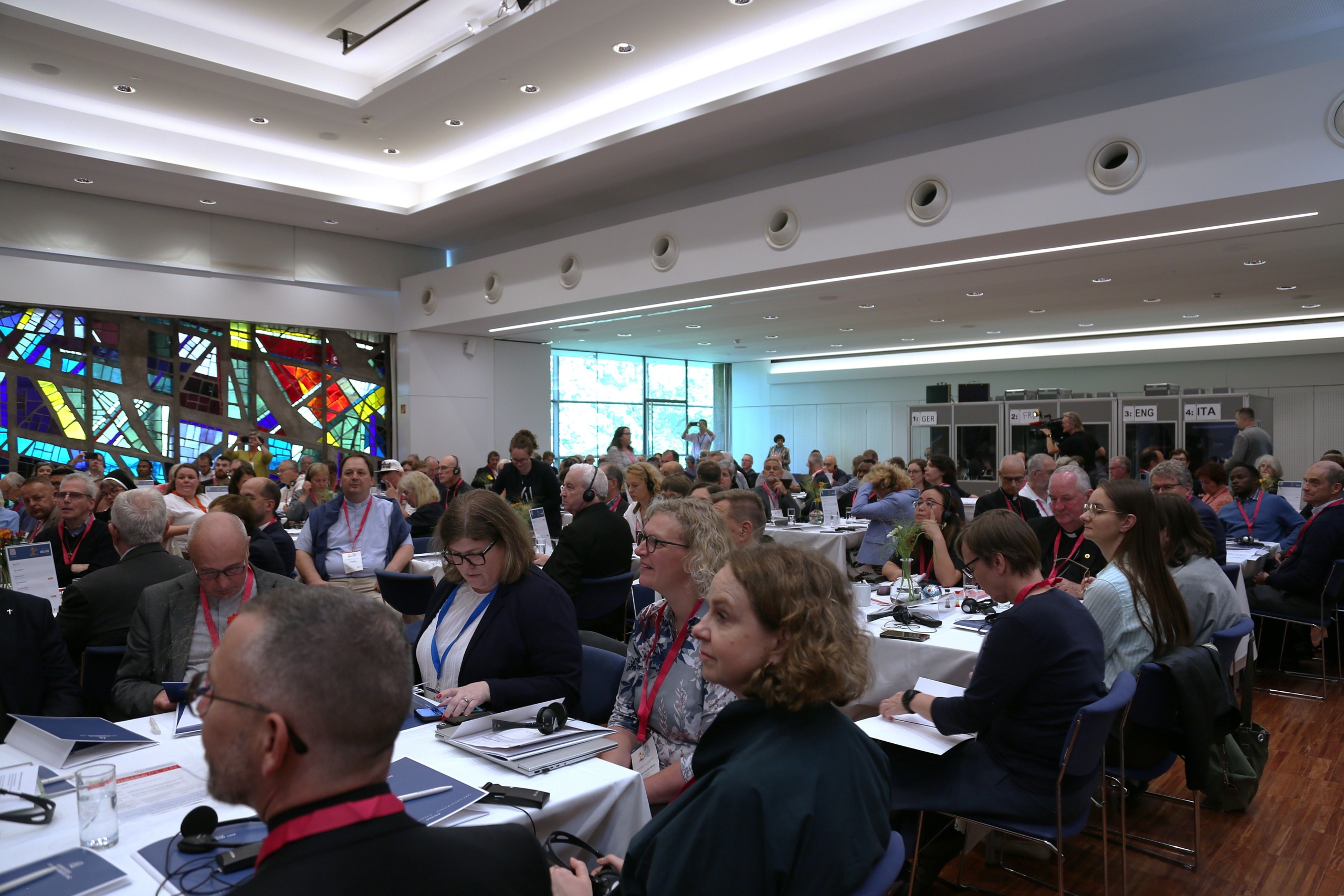
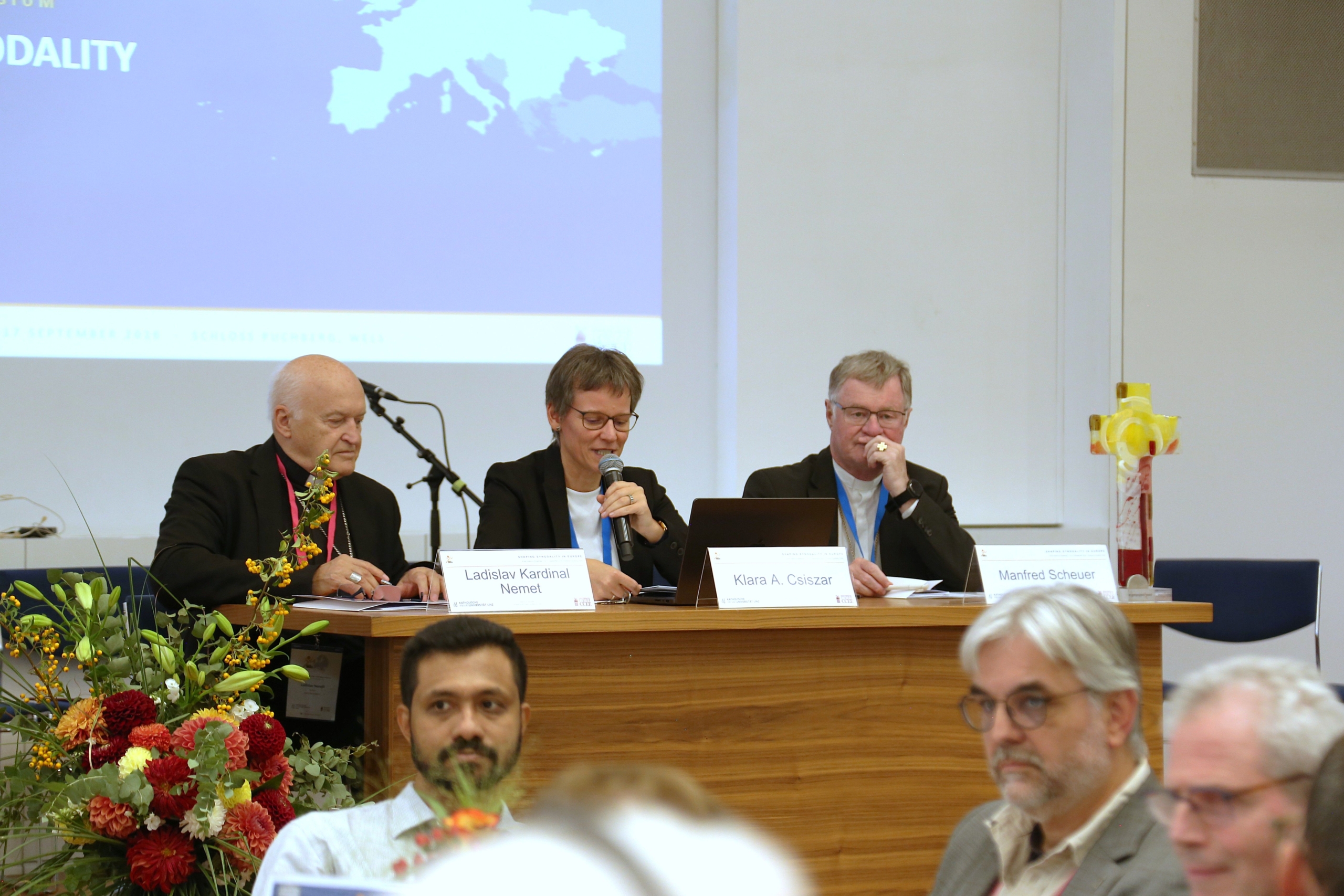
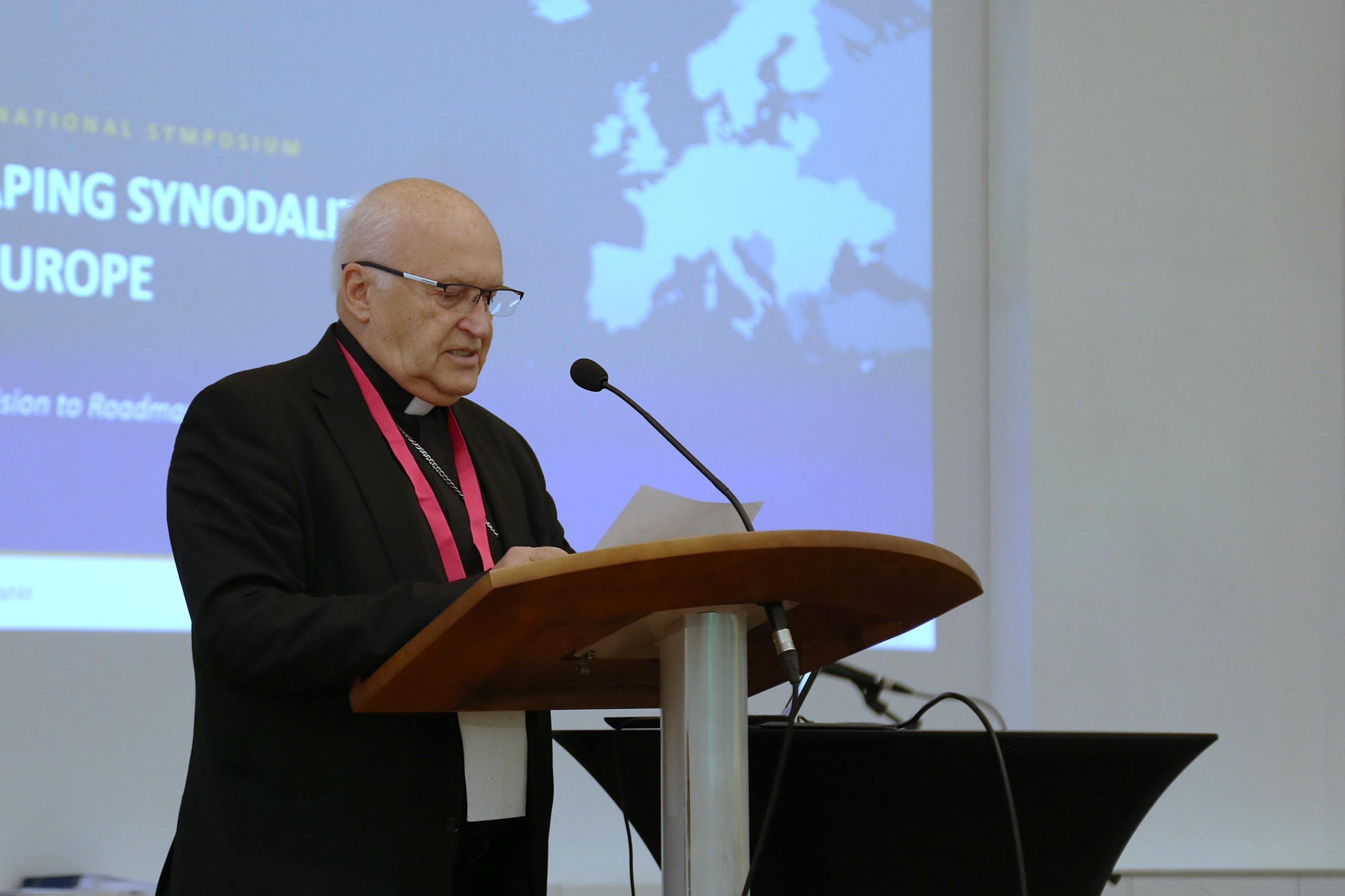
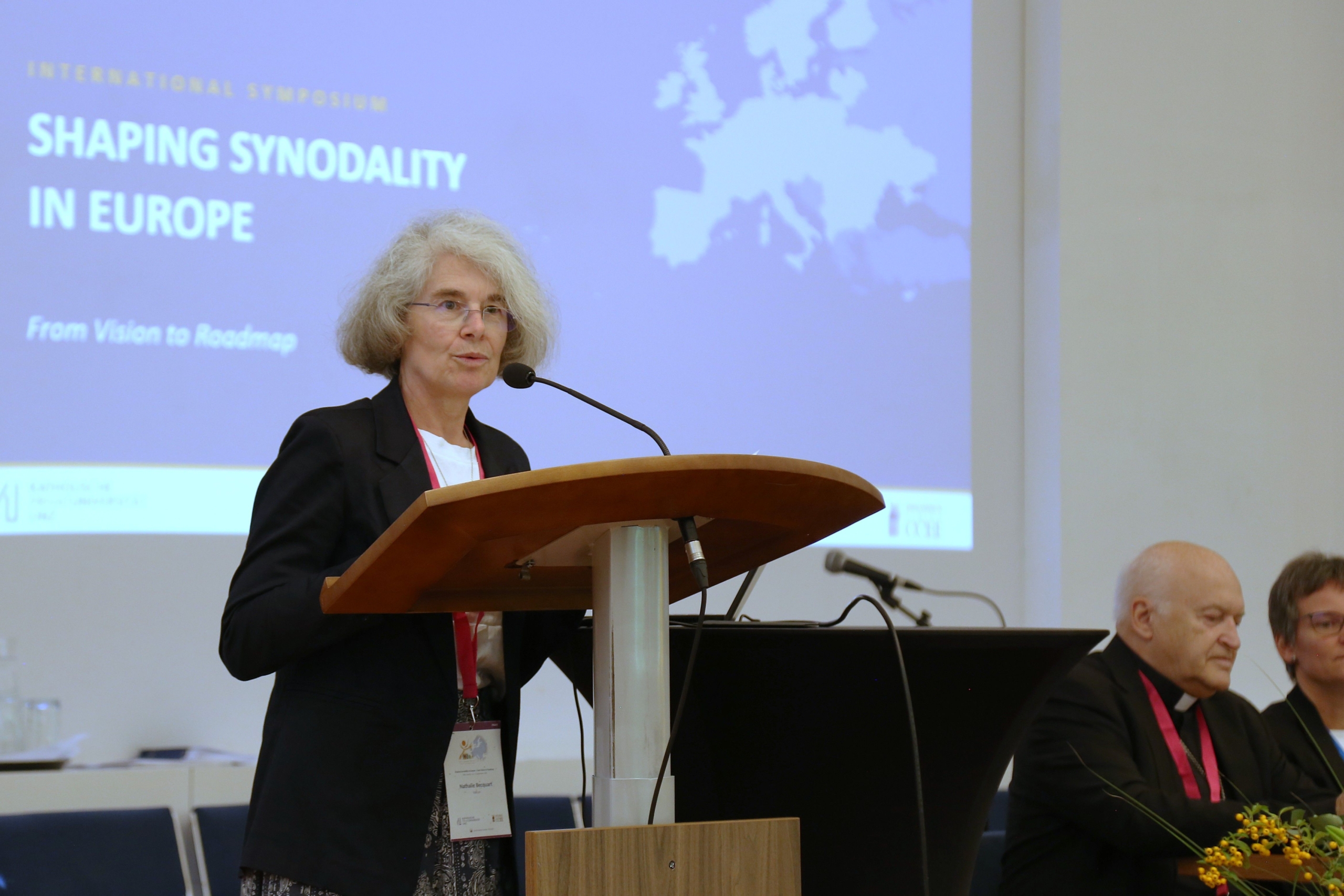
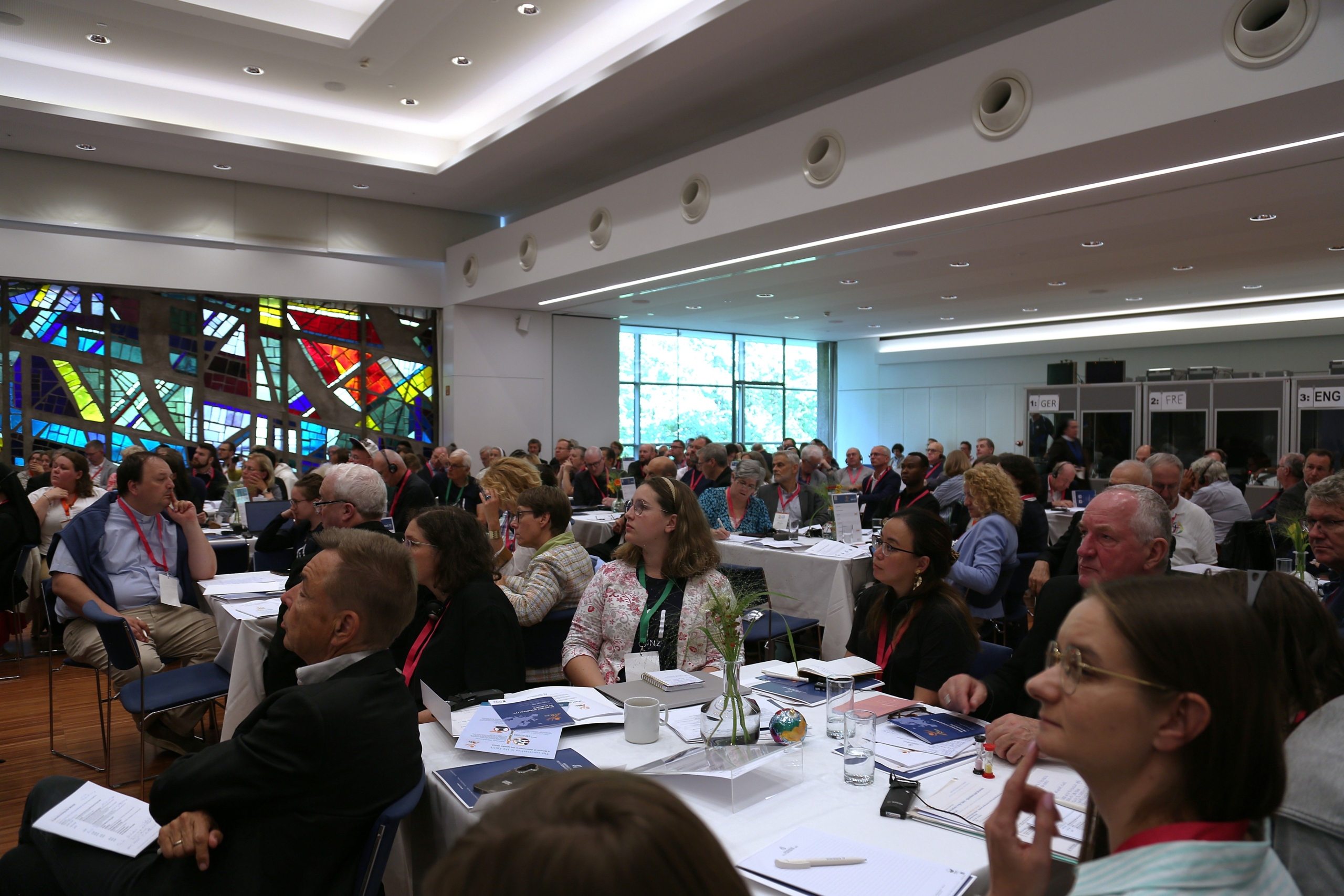
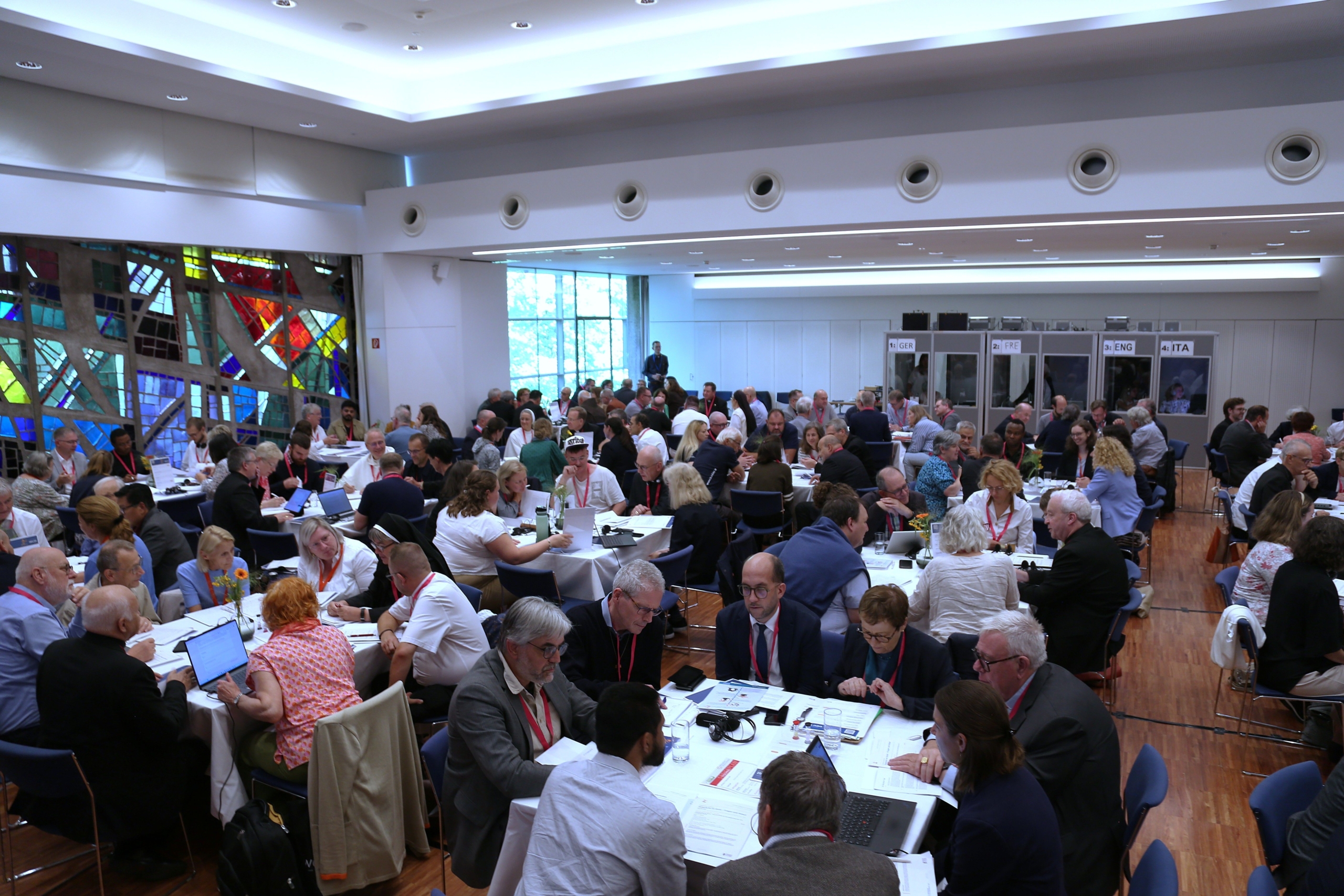
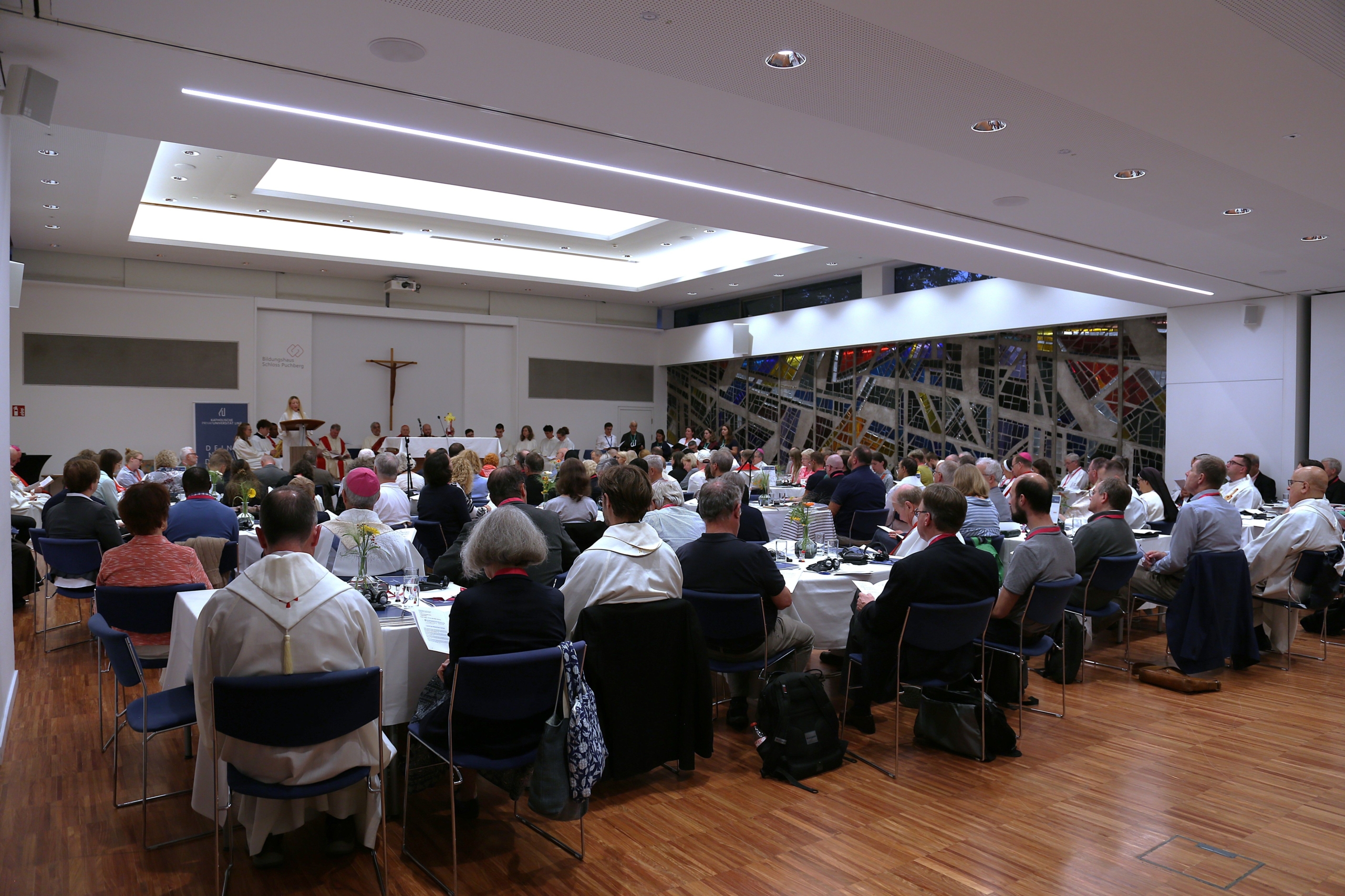
The programme was organized by the department of the Catholic Private University Linz (KU Linz) dedicated to synodality, in cooperation with the European working group on synodality and under the patronage of the Council of the Bishops’ Conferences of Europe (CCEE). Nearly 200 church-builders from 31 countries attended the gathering, including cardinals, bishops, priests, religious, laypeople, women and men. In this way, the participants faithfully represented the diversity of Europe’s Catholic community.
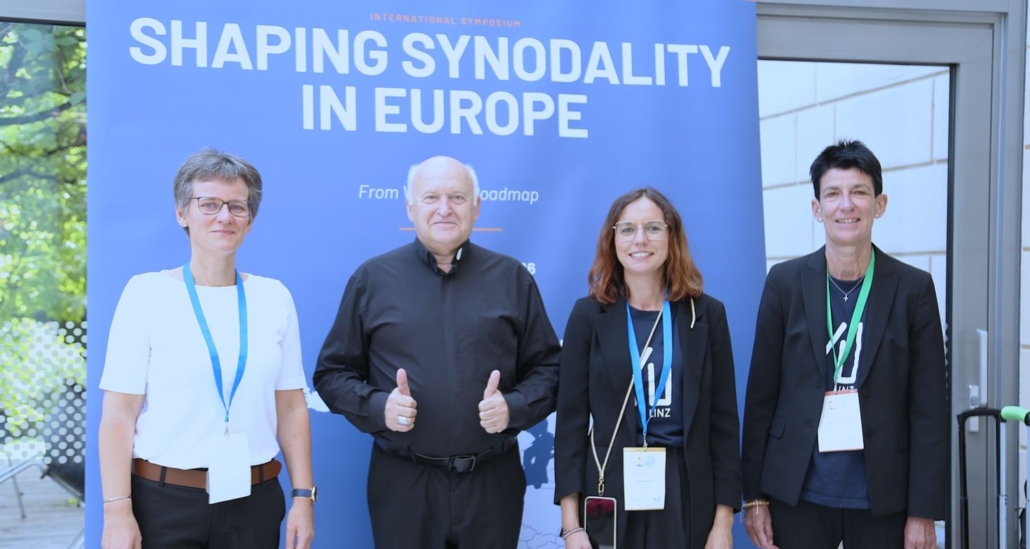
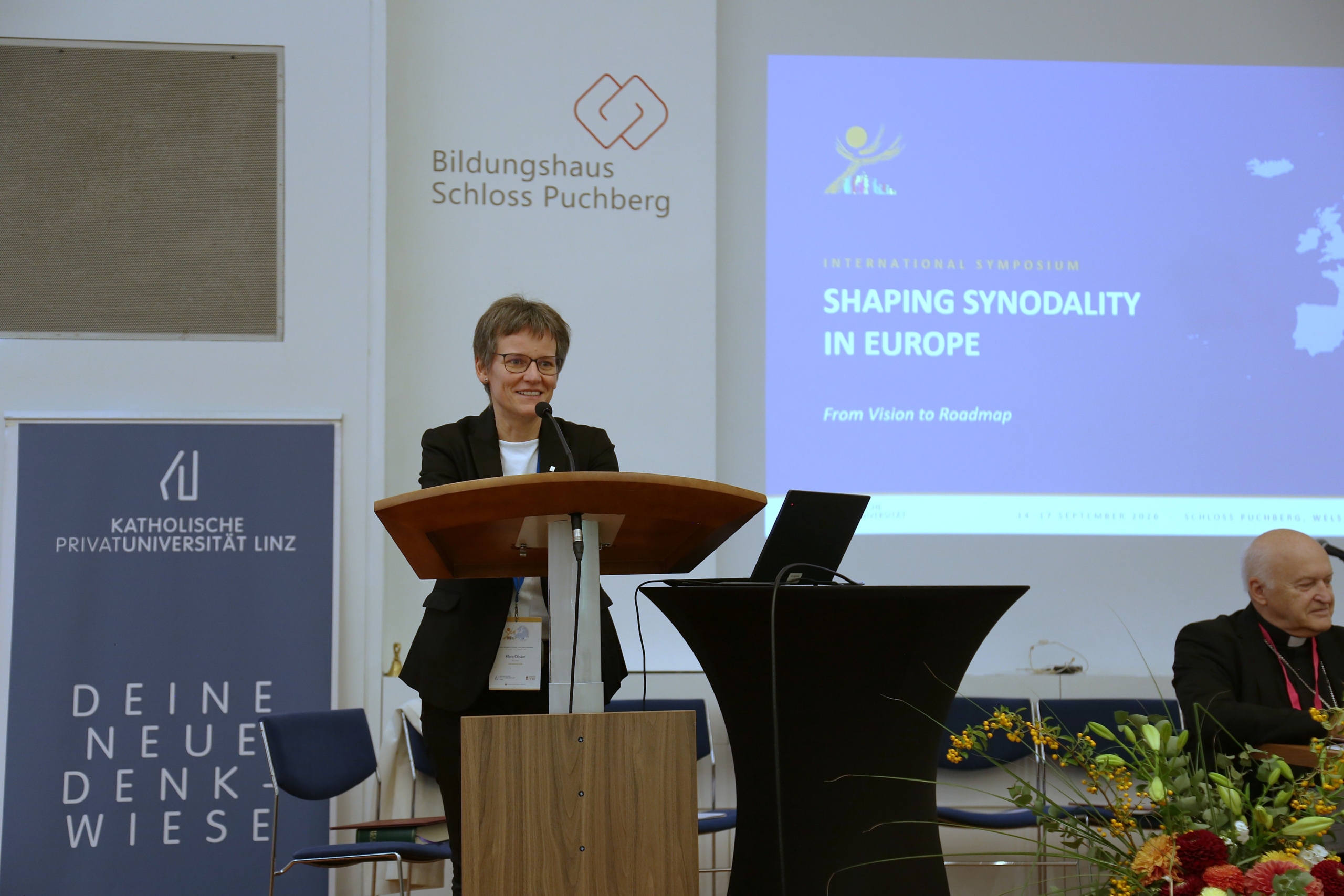
The main organizer was theologian Professor Klára Csiszár, one of Megujul.hu’s ambassadors and Vice-Rector of KU Linz.
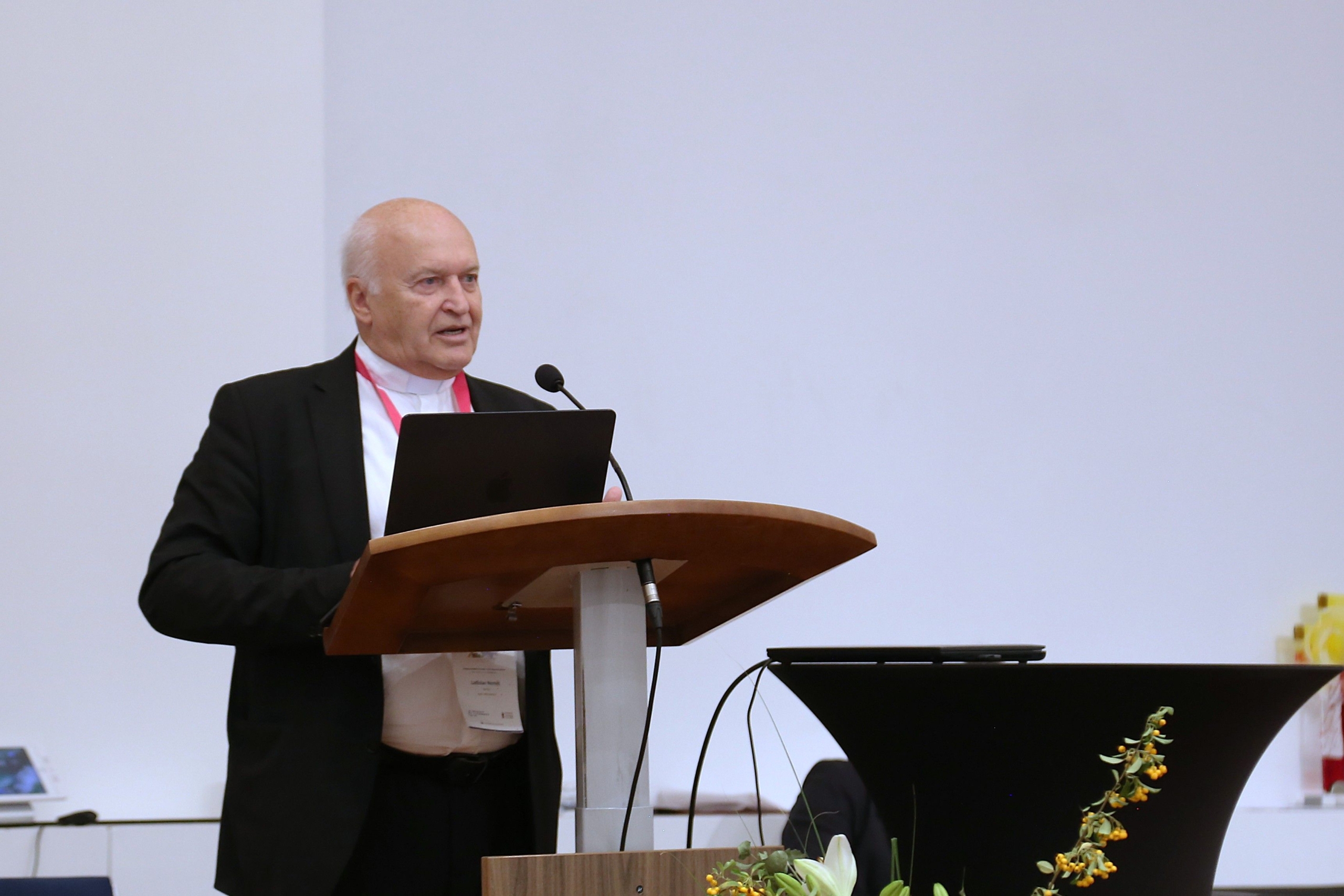
Cardinal László Német, Vice-President of the CCEE and another ambassador of Megujul.hu, also played a significant role in shaping the programme. Seventeen Hungarian-speaking participants attended the symposium, which carries an important message regarding the renewal of the Hungarian Church.
The aim of this Church summit was not merely to dream about the Christianity of the future, but to contribute to the preparation of a concrete action plan – hence the subtitle: “From Vision to Roadmap.”
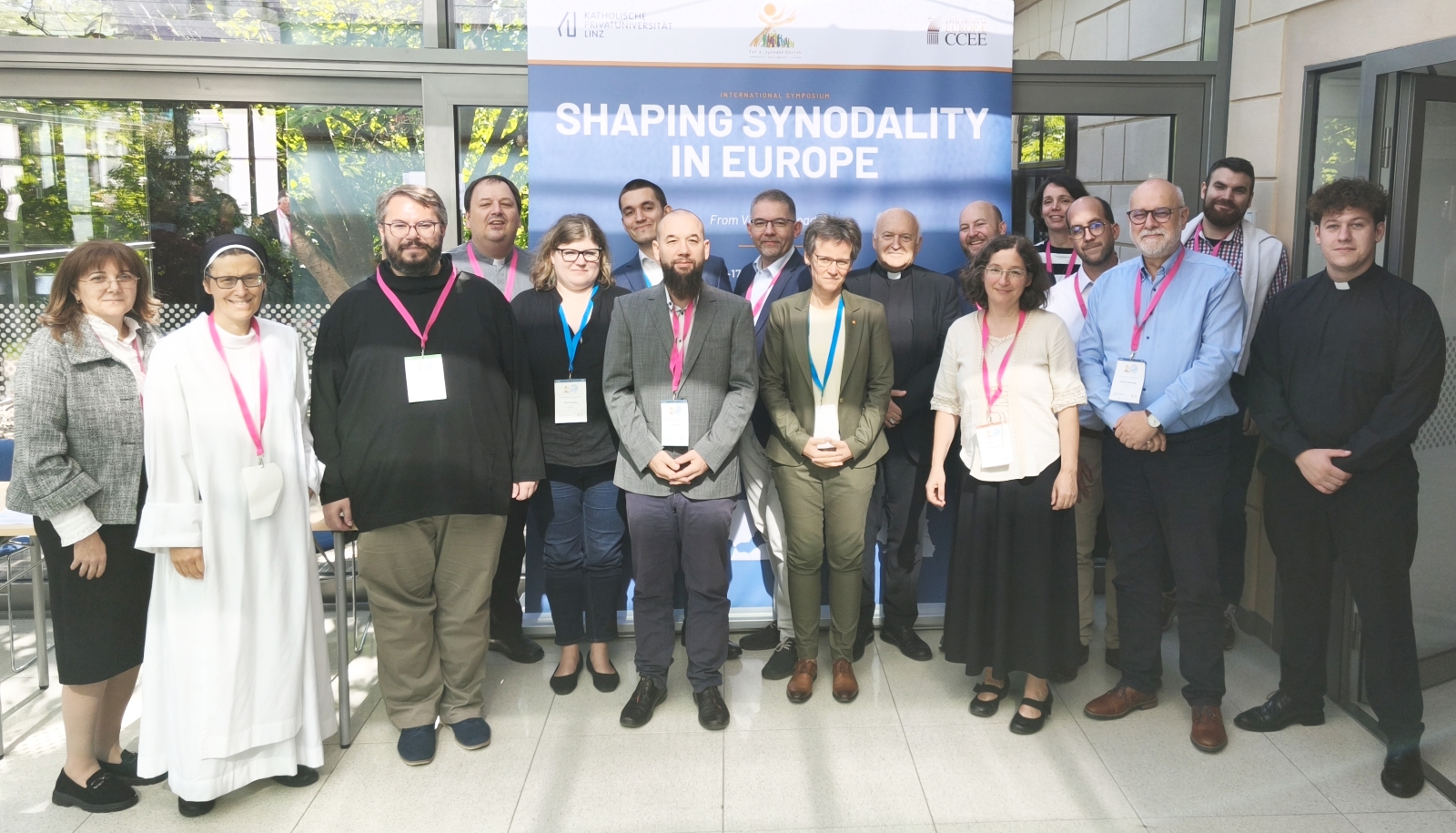
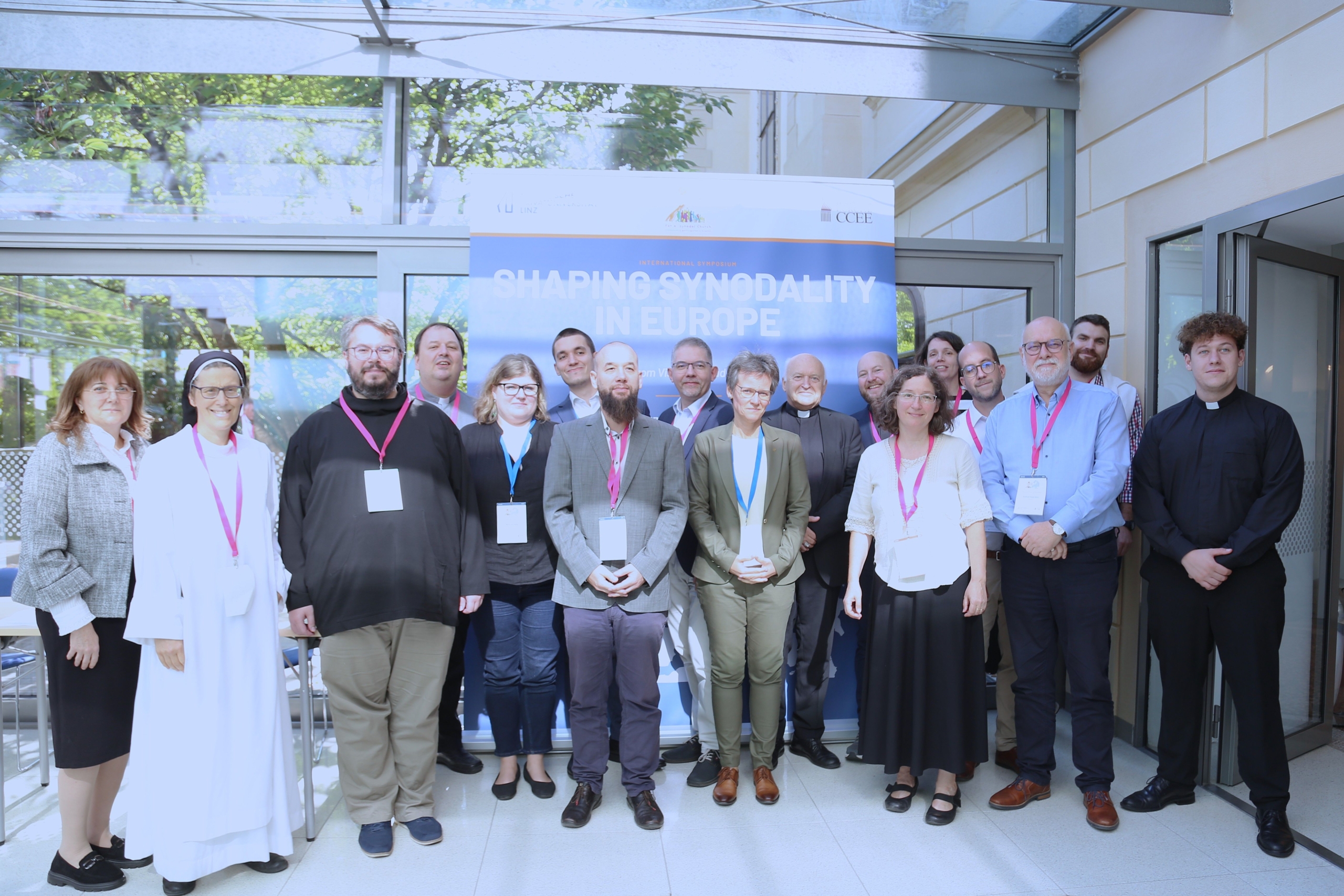
Hungarian participants (from left to right): Kiss Melánia, Deák Hedvig OP, Kisnémet Fülöp OSB, Török Csaba, Sereghy Xénia, Balogh Attila, Gulyás Péter, Gégény István, Csiszár Klára, Német László, Szaplonczay Máté, Palojtay Márta, Vadász Kinga, Kiss Gábor, Máté-Tóth András, Bársony Árpád, Ördög Valentin / Photo: Andrea Falkner
Europe Is No Longer What It Used to Be
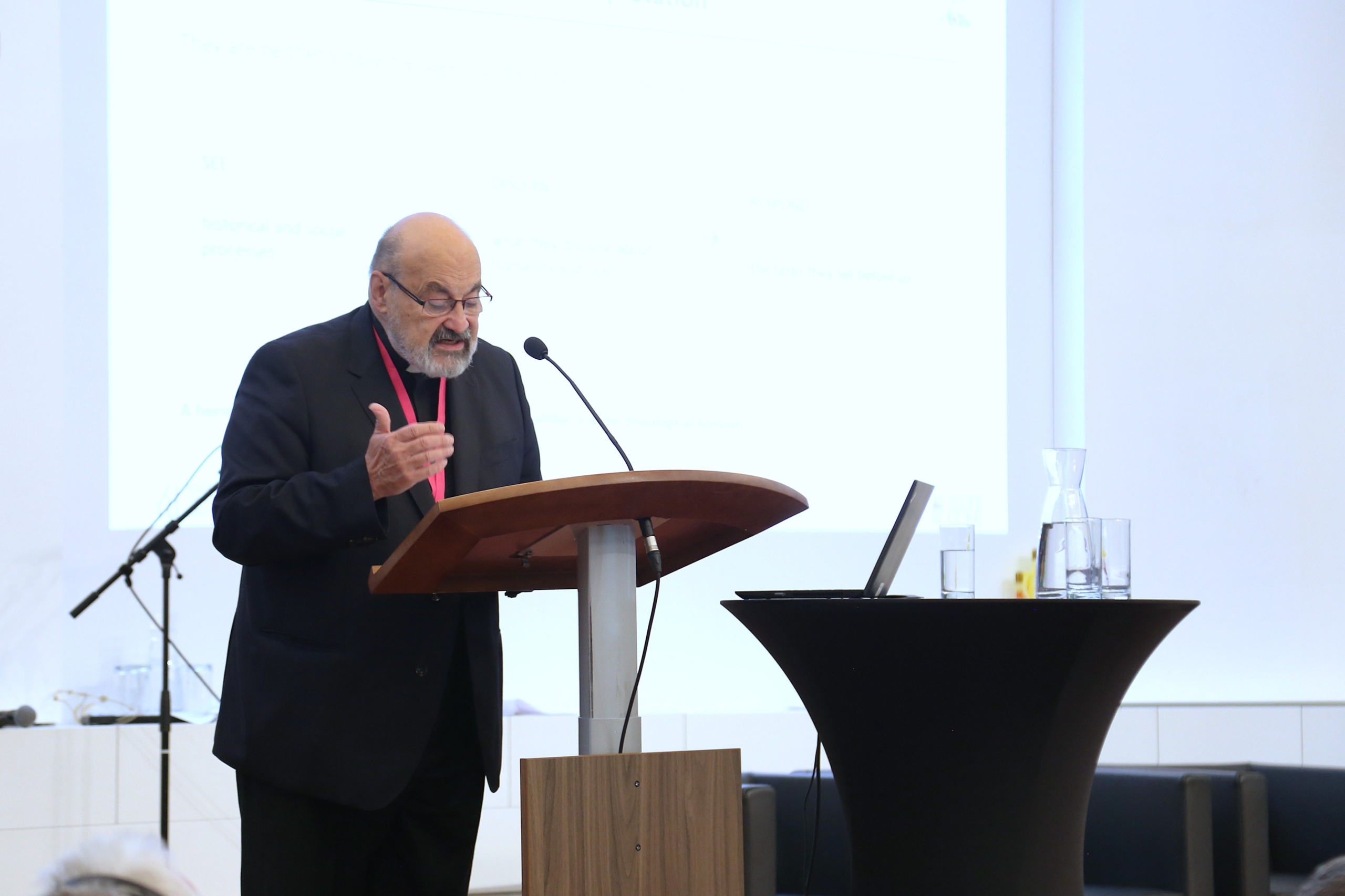
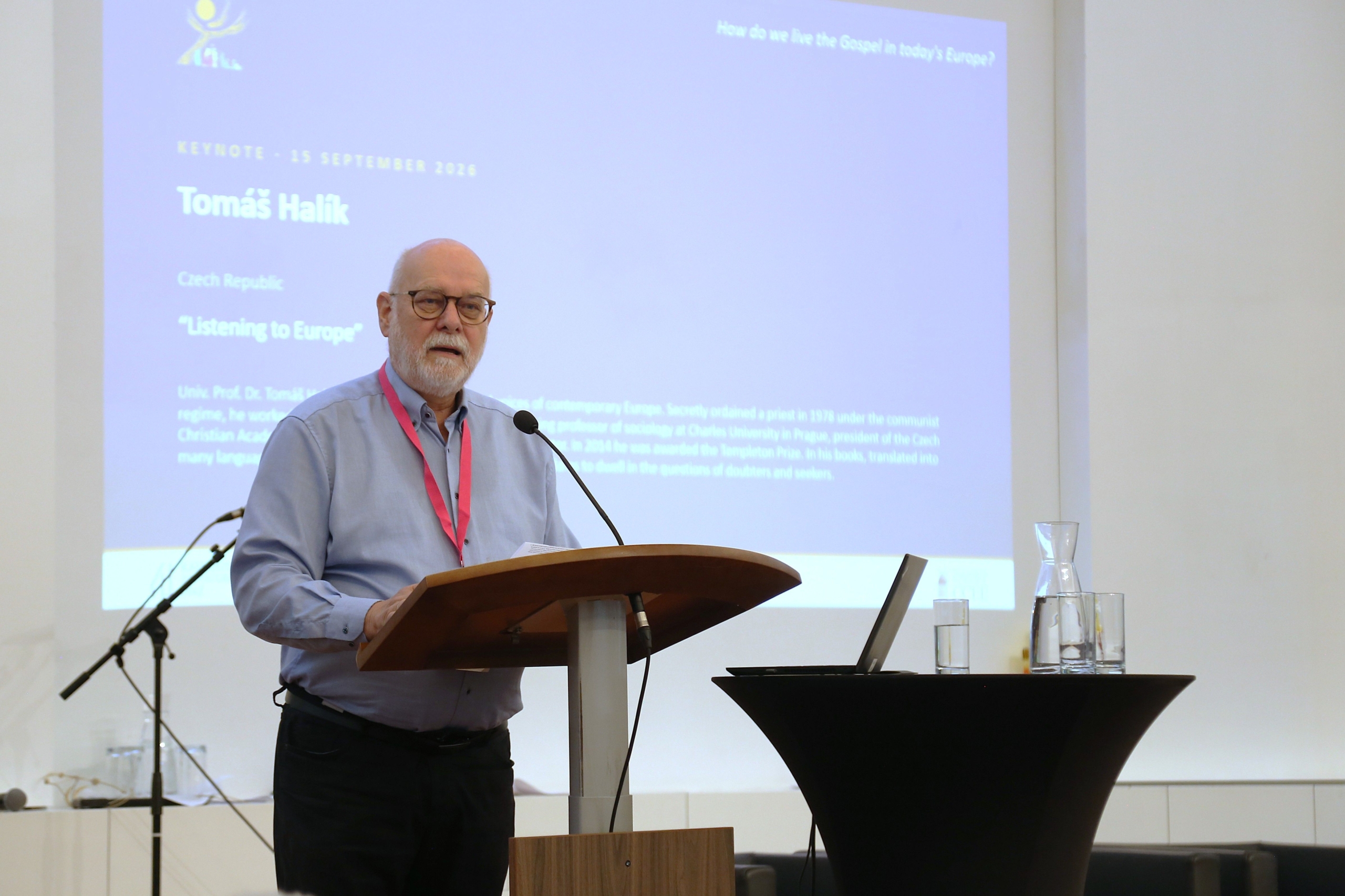
“The Old Continent is no longer the teacher of the world,” observed Tomáš Halík, the renowned Czech priest and one of today’s most influential Catholic visionaries, in his presentation. In his view, there is no question that secularization lies at the heart of the transformation Europe is undergoing before our eyes, just as there is no doubt that the Church is unable to prevent this process. The dilemma Christians need to address is whether we regard this situation as a crisis or as an opportunity for catharsis.
A positive attitude rooted in hope may be helped by distinguishing between an open, questioning form of secularization that leaves room for God and secularism that excludes faith and leaves no space for spiritual dialogue. This is not the only challenge shaping the tasks facing the European Church, as several speakers pointed out. There is, for example, the increasingly strong nationalism in a number of countries, which, rather than seeking to understand others and listen to and accept people who are different from us, reinforces polarization along the lines of “us and them” and can become a tool of exclusion.
We must also come to terms with the digitalization that is rapidly taking over our lives, opening up new arenas for proclaiming the Gospel, such as Instagram and TikTok.
Here, too, there is no point in responding to novelty with fear. The example of the Godfluencers – influencers who promote the Christian faith in the online world – was presented as a good practice, with speakers welcoming the significant growth in the number of these modern missionaries.
fotó: MIG-Pictures e.U./Michaela Greil
Ecumenism now seems less of a challenge than it did a few decades ago. Nevertheless, to quote Pope John Paul II, it is much better for the Church to breathe with both lungs. To the considerable amusement of the participants, someone remarked that “in the Balkans, there is no ecumenical dialogue without alcohol.”
In connection with the spread of Islam, speakers emphasized the importance of renewing the catechumenate and catechesis, as well as the process of introducing people to the Catholic faith. Particular attention should be paid to the 18–25 age group, with the courage to refresh well-established and sometimes formulaic approaches to formation.
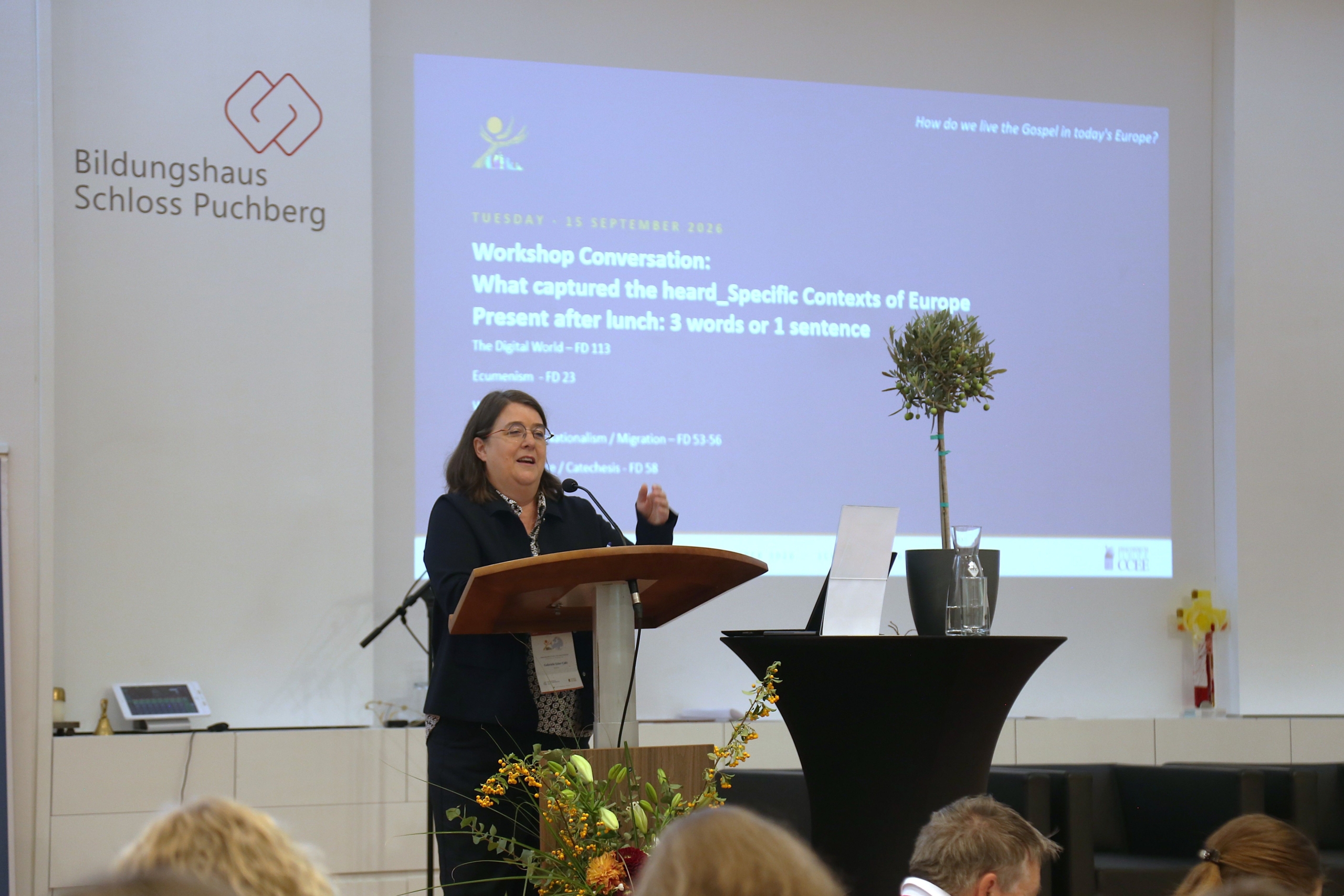
The organizers devoted special attention to the themes of war – and peace – since there has been no precedent within the European Union for Russian aggression on the scale of the war currently being waged in Ukraine since the EU was established. At the opening session, the presentation of the Ukrainian participants in the symposium was greeted with prolonged applause. One of them then made a deeply moving statement:
“Europe needs the witness of suffering Ukrainians.”
I was able to relate to this especially closely because, as one of the facilitators of the group discussions held at 21 tables, I had the opportunity to hear the thoughts of a young Polish Dominican friar who had asked his superior to transfer him to Kyiv for his ministry. Europe will certainly not be the same as it was before the war that has been ongoing since 2014, and the Church must take this into account and plan accordingly.
Not Priests, Yet Leaders – The Role of Women in the Church Is Also Changing
This article does not attempt to summarize every presentation, if only because – as is so often the case – no less important messages emerged during the group discussions, coffee breaks and evening drinks. The whole symposium felt like an extended family gathering: while we talked about concrete topics, everyone had an interesting story to tell; some greeted one another like old acquaintances, while there were also people we had never met before.
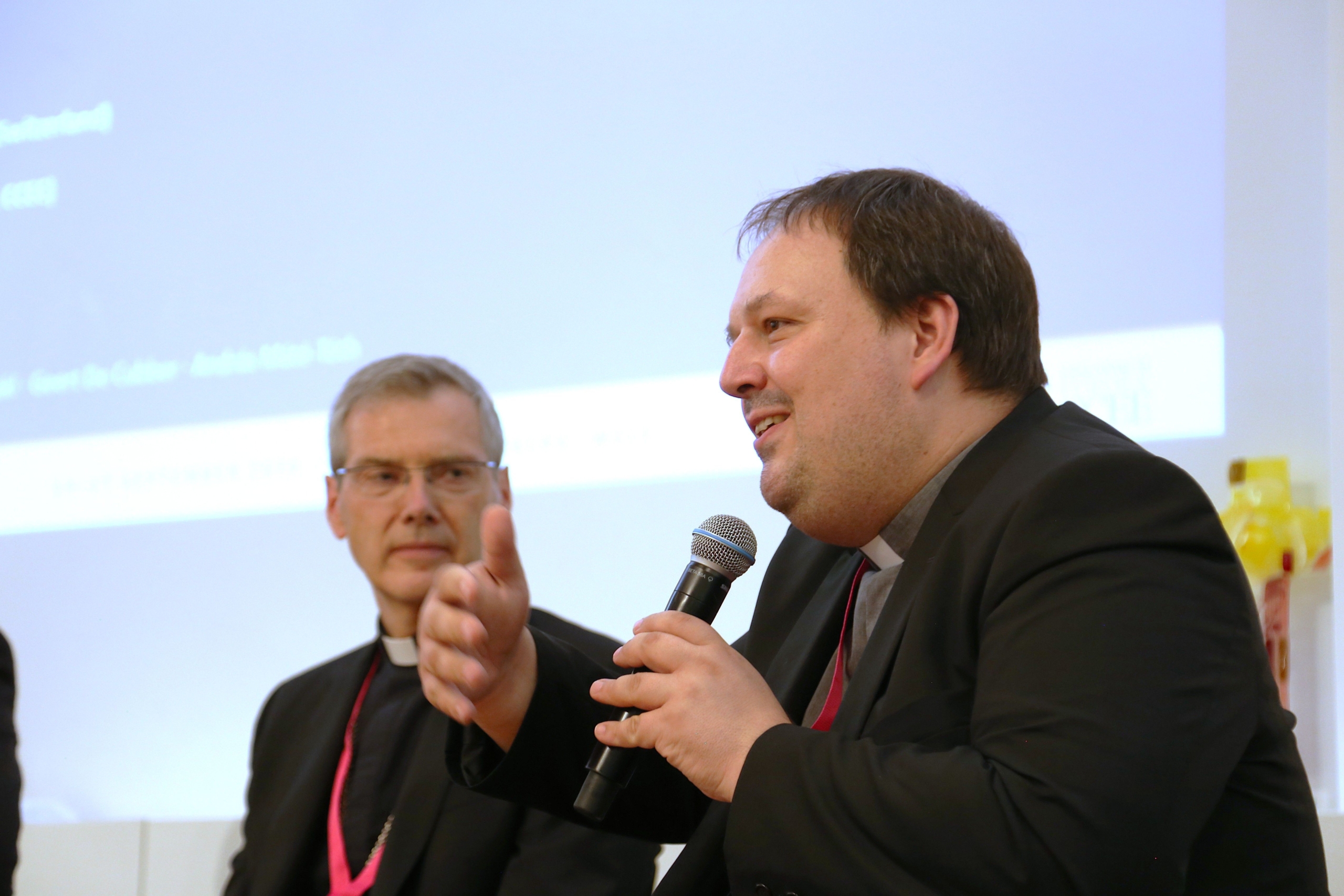
One such new face for me was Alexandre Joly, who jokingly introduced himself as the most handsome bishop in the world, since his name, translated into Hungarian, would be “Szép Sándor” – literally, “Alexander Beautiful.” The French bishop is, in fact, setting a beautiful example: his diocese is effectively led by three people – himself, his episcopal vicar and a delegate of the faithful, who is currently a woman, although a man could also hold the position. Here, then, is a concrete sign that the idea of women taking on leadership roles in the Church need not arise only in the Vatican or in the secretariats of certain bishops’ conferences, and that such roles do not necessarily imply preparing the way for women’s ordination to the priesthood.
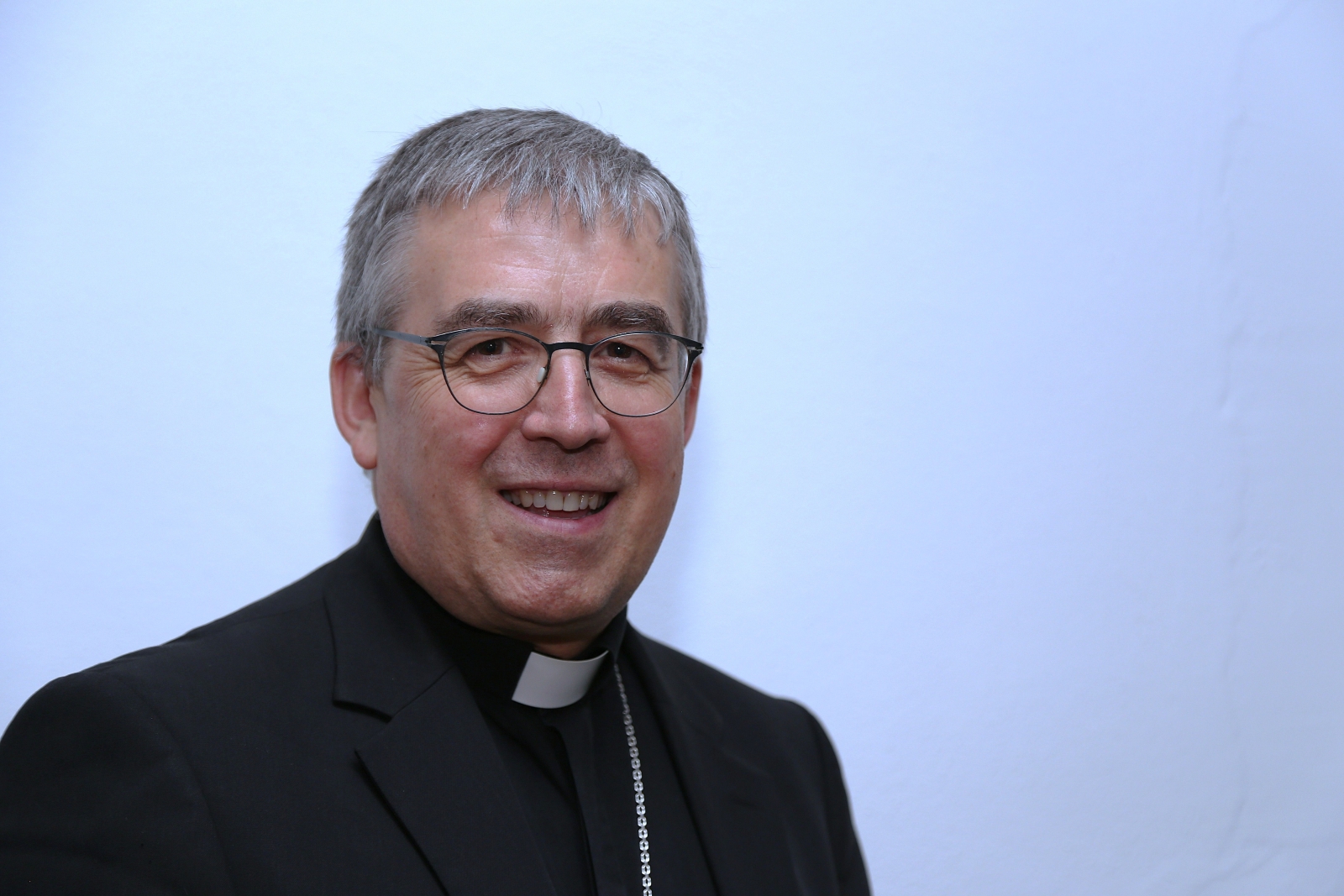
French Bishop Alexandre Joly / fotó: MIG-Pictures e.U./Michaela Greil
Paragraph 60 of the Final Document of the Synod on Synodality puts it this way: “There are no reasons preventing women from assuming leadership roles in the Church.” I also spoke with Bishop Joly about the murder of Father Jacques Hamel, whom he knew personally, as well as about sexual abuse previously committed in the French Church and the efforts to bring it to light. All of these developments have had a serious impact on the future of the Church, just as the work of the Godfluencers is making its mark. This can also be linked to the growing number of adults being baptized in France.
Another striking point, which we explored in greater depth during the group discussions, concerned the relationship between the Church and silence.
According to many participants, the European Church needs fewer words and more silence.
This does not mean remaining silent in the sense of saying nothing. Quite the opposite: it means paying attention to others and being attentive in the presence of God – in other words, cultivating a life of prayer. “Being in silence is not a comfortable situation,” one member of our table remarked, “because there it may become clear that God has different plans for us, or for the Church, from the ones we ourselves have dreamed of.” Moreover, the starting point of synodality is precisely remaining silent, or listening, because in order to walk together as we hope to do, we must first understand people who are different from us.
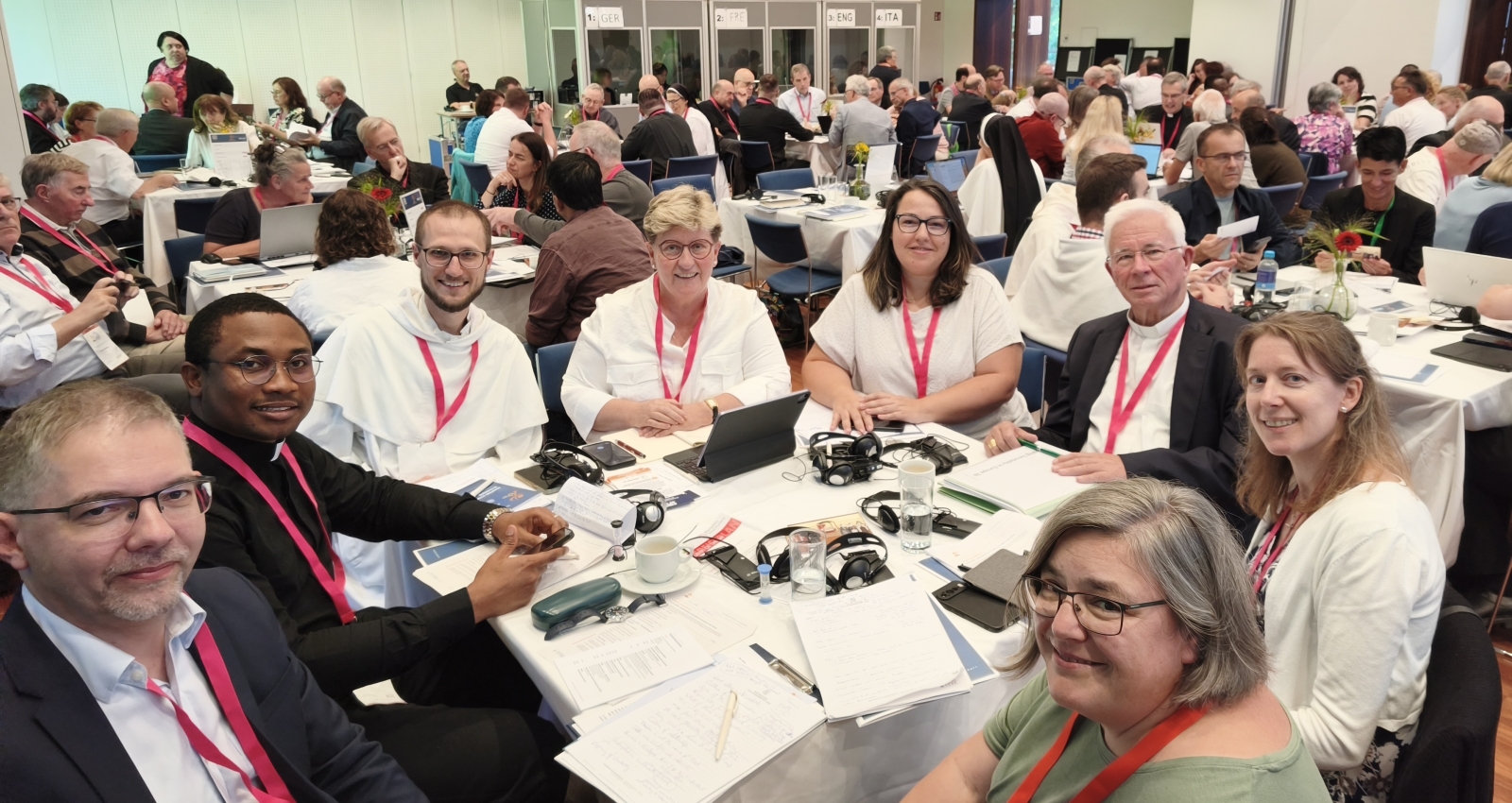
According to one religious sister, we need to change the communication culture of the European Church, which is connected to the idea expressed in the Synod’s Final Document that we need conversion in our relationships. But what happens if members of society do not want to talk to us? What if there are no questions for us to answer, no door for us to knock on? After atheism, the future Church in Europe must also confront the challenge of apatheism – indifference. In such a situation, some participants argued, there can be great value simply in being present.
Let the Symphony Resound!
The ultimate message of the rich programme and the many conversations was that the European Church needs courage above all else right now. Courage to change, to renew itself, to enter into dialogue with people who are different from us – including members of the Church who think differently. It is time to put an end to the attitude of “someone else should do something already.” We should not constantly wait for the bishops, or even the Pope or the Vatican, to tell us what we are supposed to do in every situation.
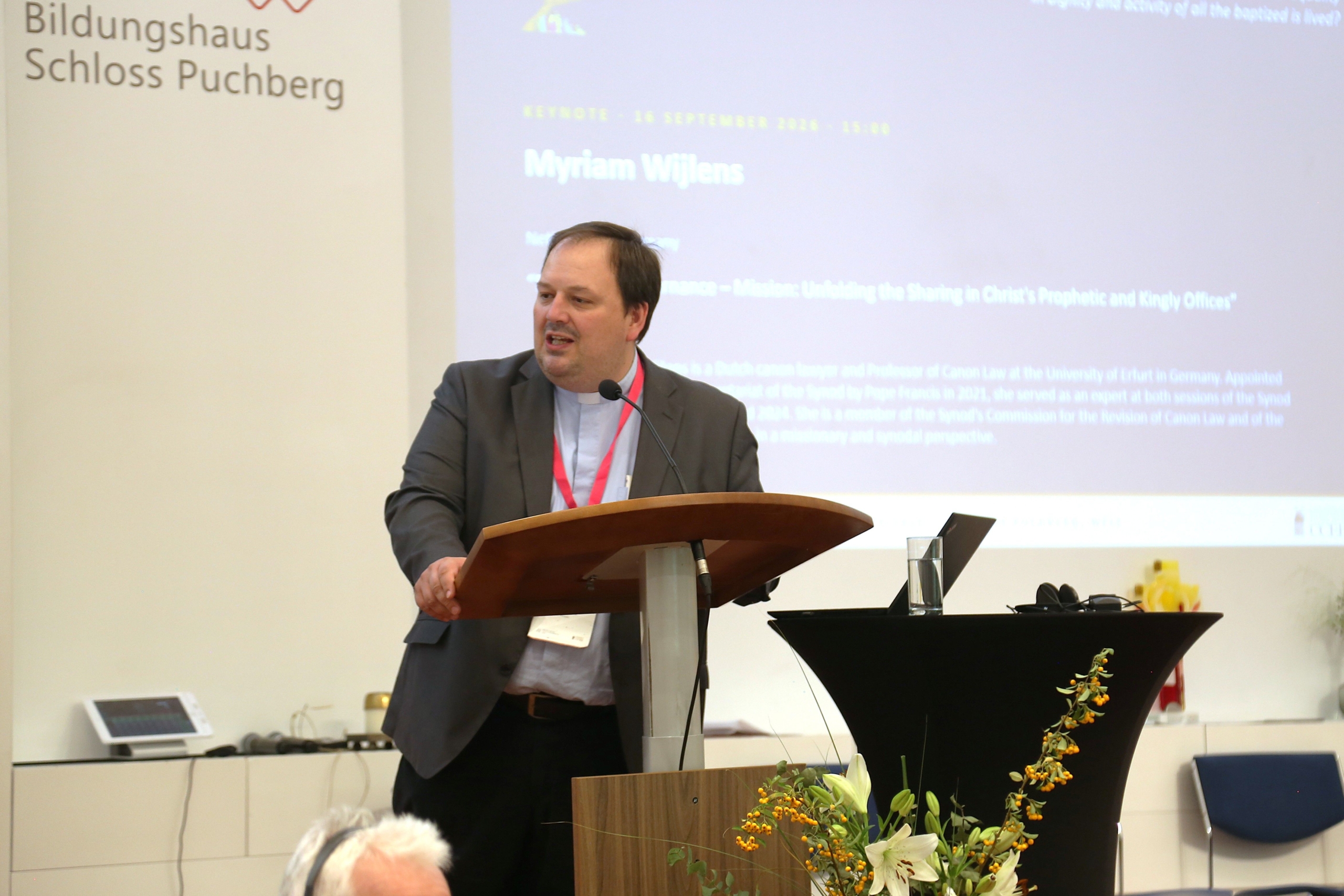
Our personal commitment as believers, the dignity of being children of God received in baptism, and our shared responsibility call us not to think of ourselves as second-class or subordinate members of the Church whose only task is to carry out instructions. The Dutch canon lawyer Myriam Wijlens illustrated the development of Church governance in this regard very vividly when she showed how decisions were made at the heart of the Church in different periods of history.
At the First Vatican Council, the Pope sat in a prominent position, while the bishops were seated considerably lower down. Within this logic, the Pope alone was regarded as the mediator of the Spirit and the sole bearer of authority.
At the Second Vatican Council, there was no hierarchy of seating in St Peter’s Basilica; by then, the council fathers as a whole exercised communal decision-making. At the Synod on Synodality, there was another significant step forward: the participants did not sit looking at one another’s backs, but around round tables. In the final group photograph, the Pope is still positioned in the centre, but he is no longer standing above everyone else. Instead, he is part of the body of decision-makers, among whom women and men, clergy and laypeople are all present.
Here we see the Spirit seeking to give life to the Church, continually calling Christians to renewal. According to one speaker, even bishops can benefit from mentoring and coaching. One of the great strengths of a synodal Church is that it transcends political and physical boundaries, that it acts, and that it brings to life what the Church defined at the Second Vatican Council. The path of synodal renewal is important because a courageous, dialogical and attentive Church can offer much to the Europe of the future.
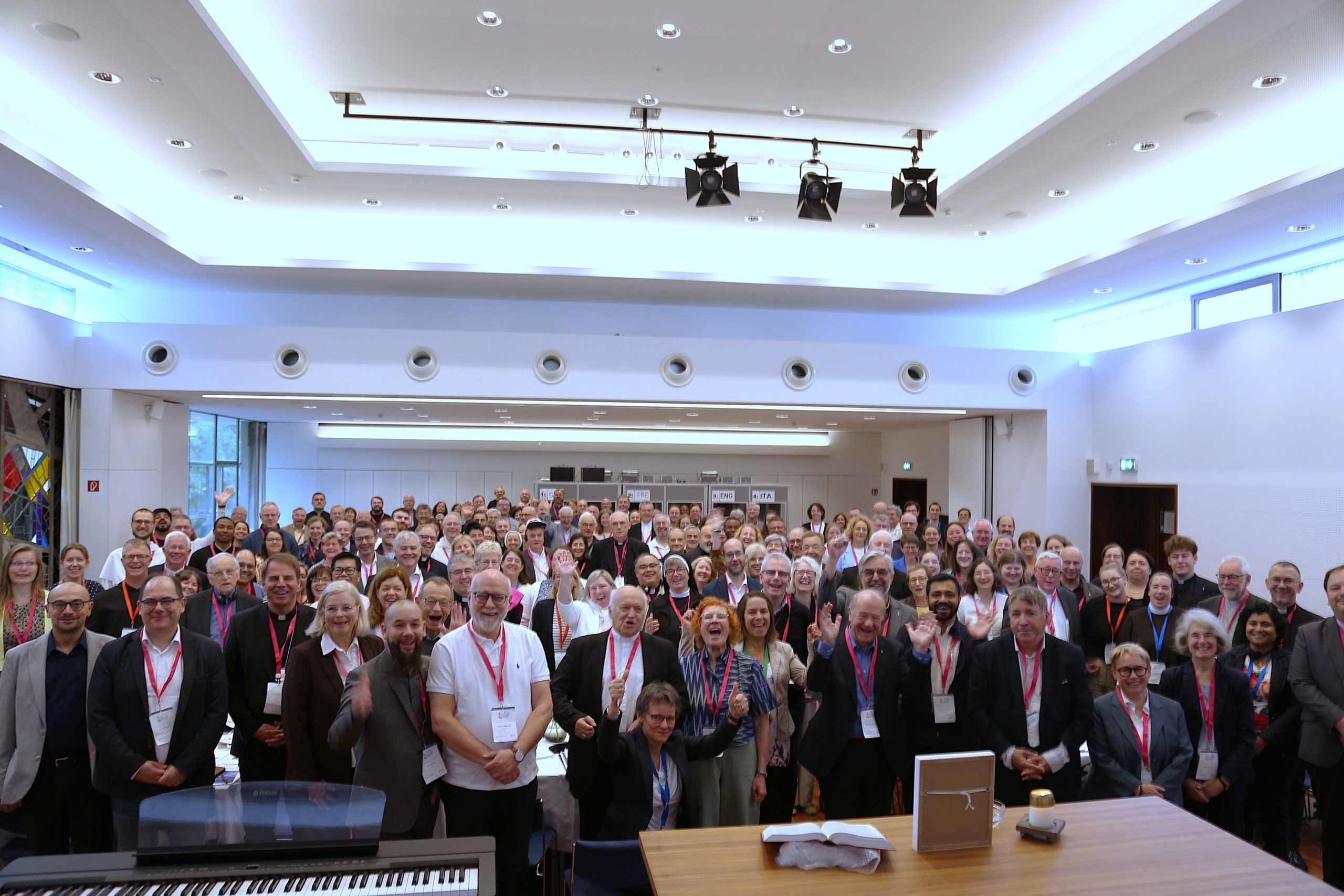
Photo: MIG-Pictures e.U./Michaela Greil
If we imagine the future of the continent without the Church, and then with the Church, it becomes clear that European society should continue its journey together with us.
For this, however, we also need to live out, practise and nurture the unity of the Church.
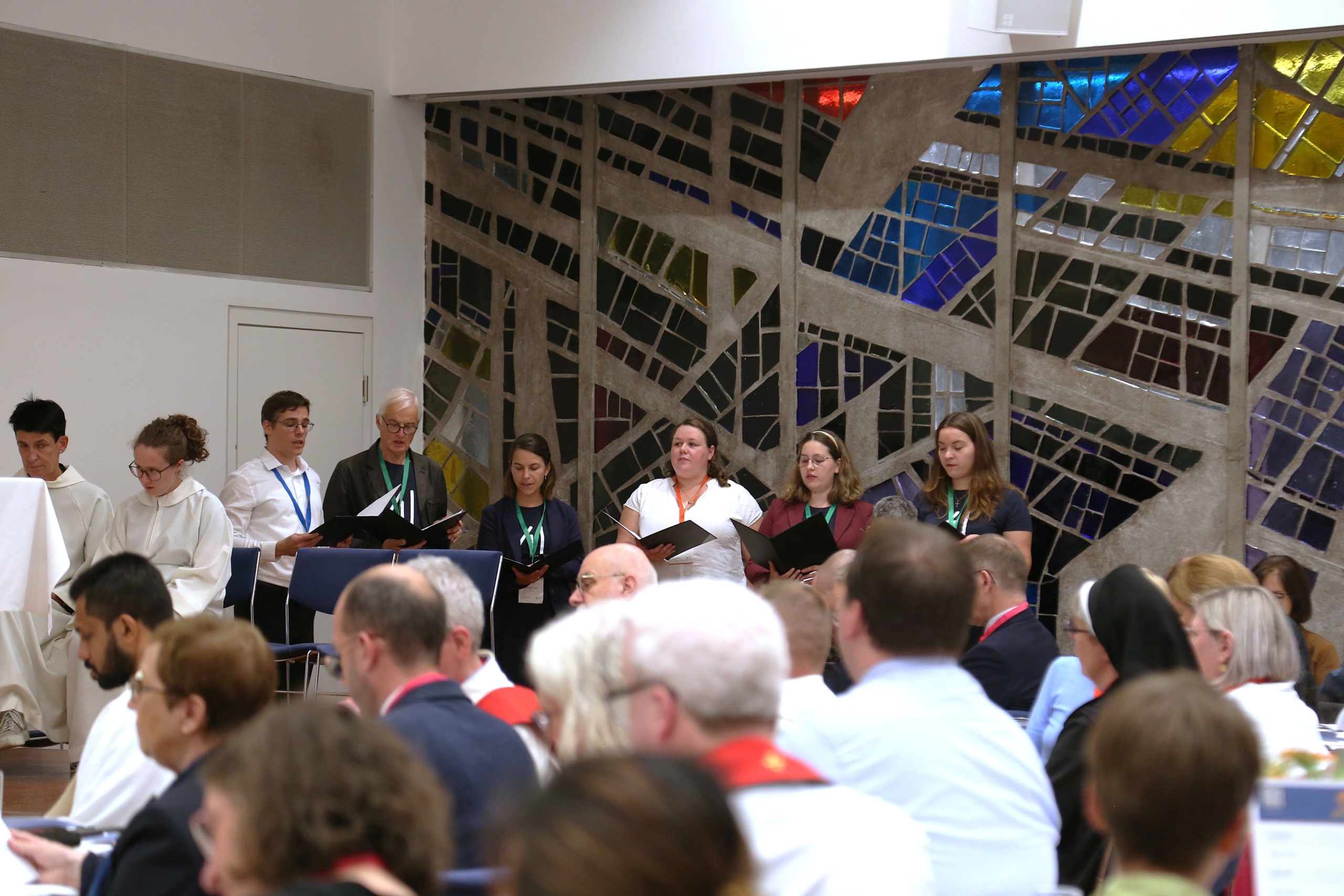
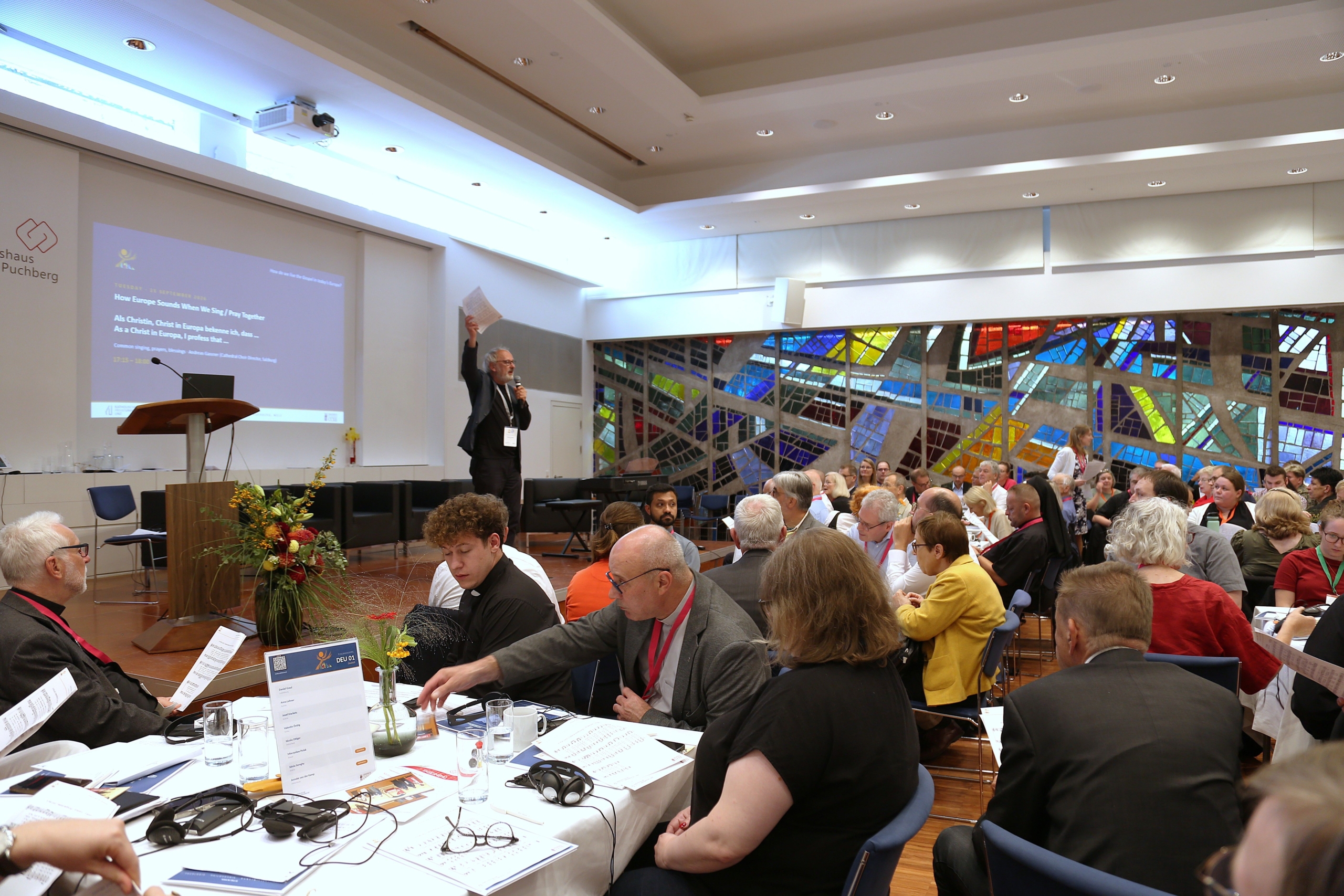
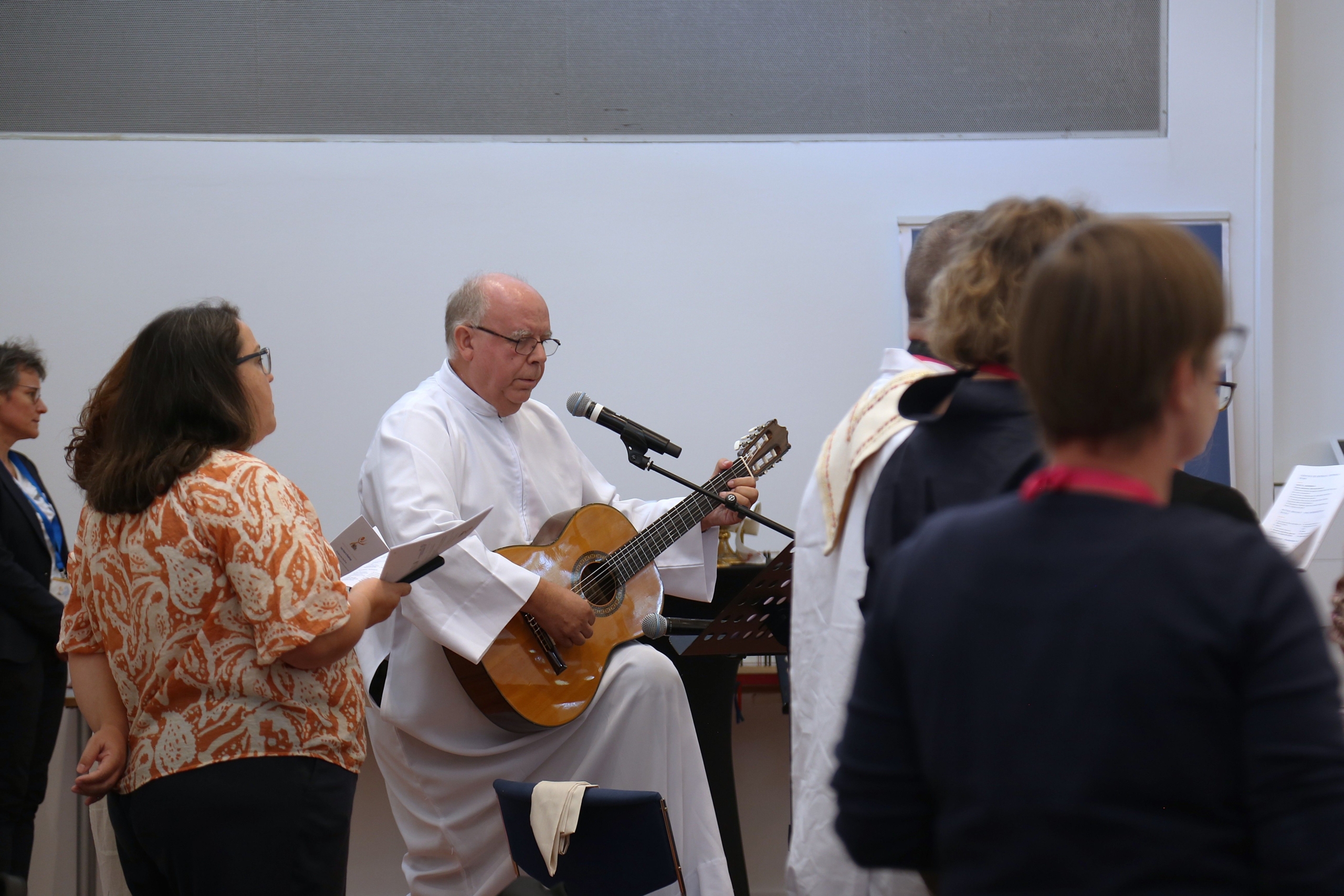
The word “symphony” came up repeatedly at the symposium, and one musician even had the diverse gathering sing together. It was an exceptional experience to hear bishops, religious, laypeople, women and men humming and singing simple songs in four-part harmony – and to be part of that enormous, improvised choir.
During one of the group discussions, a participant put it this way: “It feels so bad to realize that only half of the orchestra is playing.” And this is precisely what is at stake in the synodal process. If some people are left out or withdraw, if there is division, then the world can rightly ask: how can these Catholics want to live in community with us if they cannot even live in unity with one another? As was said at the symposium, the liturgy – just like the whole of Church life – is not a theatre in which there are spectators and performers. Everyone is called to participate. Everyone has a mission.
This is what the symposium strengthened us in, and it is also what the mini-synods to be held in Pécs on September 27 and in Pannonhalma on October 3 can encourage and support through practical assistance. And it is worth putting this date in your calendar already: let us meet on November 12 in Budapest at the synodal conference presenting good practices, experiences and perspectives from Hungary!
-
- fotó: MIG-Pictures e.U./Michaela Greil
-
- fotó: MIG-Pictures e.U./Michaela Greil
-
- fotó: MIG-Pictures e.U./Michaela Greil
-
- fotó: MIG-Pictures e.U./Michaela Greil
-
- fotó: MIG-Pictures e.U./Michaela Greil
-
- fotó: MIG-Pictures e.U./Michaela Greil
-
- fotó: MIG-Pictures e.U./Michaela Greil
-
- fotó: MIG-Pictures e.U./Michaela Greil
-
- fotó: MIG-Pictures e.U./Michaela Greil
-
- fotó: MIG-Pictures e.U./Michaela Greil
-
- fotó: MIG-Pictures e.U./Michaela Greil
-
- fotó: MIG-Pictures e.U./Michaela Greil
-
- fotó: MIG-Pictures e.U./Michaela Greil
-
- fotó: MIG-Pictures e.U./Michaela Greil
-
- fotó: MIG-Pictures e.U./Michaela Greil
-
- fotó: MIG-Pictures e.U./Michaela Greil
-
- fotó: MIG-Pictures e.U./Michaela Greil
-
- fotó: MIG-Pictures e.U./Michaela Greil
-
- fotó: MIG-Pictures e.U./Michaela Greil
-
- fotó: MIG-Pictures e.U./Michaela Greil
-
- fotó: MIG-Pictures e.U./Michaela Greil
-
- fotó: MIG-Pictures e.U./Michaela Greil
-
- fotó: MIG-Pictures e.U./Michaela Greil
-
- fotó: MIG-Pictures e.U./Michaela Greil
-
- fotó: MIG-Pictures e.U./Michaela Greil
-
- fotó: MIG-Pictures e.U./Michaela Greil
-
- fotó: MIG-Pictures e.U./Michaela Greil
-
- fotó: MIG-Pictures e.U./Michaela Greil
-
- fotó: MIG-Pictures e.U./Michaela Greil
-
- fotó: MIG-Pictures e.U./Michaela Greil
-
- fotó: MIG-Pictures e.U./Michaela Greil
-
- fotó: MIG-Pictures e.U./Michaela Greil
-
- fotó: MIG-Pictures e.U./Michaela Greil
-
- fotó: MIG-Pictures e.U./Michaela Greil
-
- fotó: MIG-Pictures e.U./Michaela Greil
-
- fotó: MIG-Pictures e.U./Michaela Greil
-
- fotó: MIG-Pictures e.U./Michaela Greil
-
- fotó: MIG-Pictures e.U./Michaela Greil
-
- fotó: MIG-Pictures e.U./Michaela Greil
-
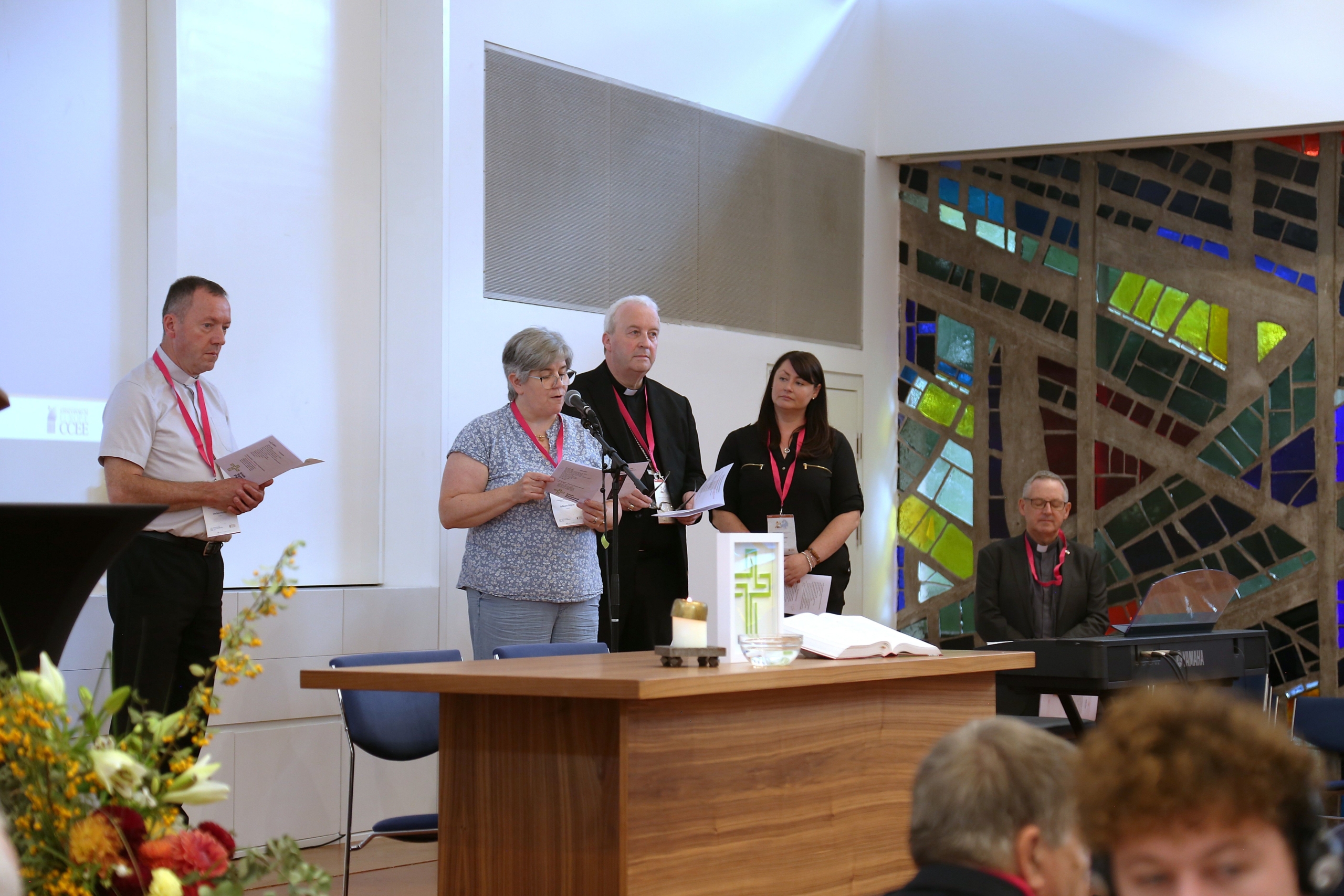
- fotó: MIG-Pictures e.U./Michaela Greil
-
- fotó: MIG-Pictures e.U./Michaela Greil
-
- fotó: MIG-Pictures e.U./Michaela Greil
-
- fotó: MIG-Pictures e.U./Michaela Greil
-
- fotó: MIG-Pictures e.U./Michaela Greil
-
- fotó: MIG-Pictures e.U./Michaela Greil
-
- fotó: MIG-Pictures e.U./Michaela Greil