“The German Church Is an Essential Voice in the Universal Church” – Catholic Day in Würzburg
It is a rare grace when someone arrives from outside at a great celebration of a local Church and nevertheless feels at home. This was the feeling with which I traveled to Würzburg for the 104th German Catholic Day. The event held from May 13 to 17 gathered the living and diverse community of the German Catholic Church under the motto “Hab Mut, steh auf” – “Take courage, rise up.” As a Verbite missionary, I spent many years in German-speaking countries, so for me this Church is not an abstract reality but one of faces, friendships, and shared theological work. That is why I would like to share a few personal impressions.
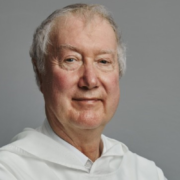
A report by Cardinal László Német, Archbishop of Belgrade
The Opening and Public Responsibility
Wednesday evening’s opening already clearly indicated the fundamental tone of the event. The presence of Federal President Frank-Walter Steinmeier, and especially the speech of Irme Stetter-Karp, president of the Central Committee of German Catholics, showed that this Church knows it has a mission within society; it is not a parallel reality separate from it, and it consciously embraces its prophetic role. The speech focused on the defense of democracy, social solidarity, and the responsibility that Catholics cannot remain silent when the rule of law and human dignity are endangered. It was good to hear the German Federal President — himself a Protestant Christian — courageously defend the efforts of Pope Leo XIV for peace.
Why Was It Good to Be There?
I have already participated in many Catholic Days, but in Würzburg there was a particular intensity in the air. Nearly nine hundred programs, forty major panel discussions, thousands of volunteers, young and old, bishops and laypeople, theologians and politicians all shared the same joyful atmosphere. Sixty thousand participants had been expected; more than seventy thousand attended. For me, it was especially important that everywhere there were full houses: churches, lecture halls, streets. Encounters, joy, and hope permeated the people; everyone was smiling.
At a time when we often speak about the shrinking of the Church, this presence in itself was an important theological message. Here, a truly baptized people stood up and took part in the life of the Church, showing their faith and embracing their mission in society in the sense spoken of by Pope Francis and now Pope Leo XIV.
I participated in three Masses. Liturgically refined, musically excellent, and spiritually profound, each celebration filled churches or public squares despite the rain. This is not a merit in itself, but it is a sign that the German Church — despite all its internal tensions — is capable of celebrating faith publicly and drawing strength from the Eucharist for community and prophetic witness.
The Importance of the Prophetic Voice
In Würzburg I was once again strengthened in the conviction that one of the greatest gifts German Catholicism offers to the universal Church is that faith has not retreated into the private sphere. Associations, parishes, Caritas, aid organizations, academic institutes — small and large alike — together carry what theology calls the prophetic dimension of the Church.
This Church speaks out on social justice, the climate crisis, the situation of refugees, democracy, and peace. Not out of political ambition, but because it takes the Gospel seriously. Without such voices, the basic concepts of Christianity can easily become empty or be filled with foreign content.
The Experience of the Panel Discussion
For me, the outstanding event was the Saturday afternoon panel discussion at the Würzburg Congress Center. Together with Cardinal Mario Grech, Julieann Moran, Birgit Weiler, and Finja Miriam Weber, we discussed synodality as a structural principle of the Church. The hall was packed, and the attentiveness was almost tangible.
In my brief remarks, I highlighted three roots of the synodal culture of the German Church. The first was the legacy of the Würzburg Synod, which initiated a theologically grounded reception of the Second Vatican Council. The second was the People of God conscious of their baptism, actively participating in the life of the Church and taking responsibility; in the German Church this is not merely a teaching but the everyday life of the Church. The third was sensitivity to the credibility of the Church, which is a tangible prerequisite for the Church’s witness and strength.
At the same time, I also spoke openly about the difficulties. German debate culture can at times be harsh, occasionally hurtful or seemingly arrogant. This has provoked resistance in several Eastern European Churches and served as an excuse for avoiding the synodal process. The German Church is an essential voice in the universal Church, not as a pioneer standing ahead of others, but as an important partner.
I also emphasized that in many places implementing synodality is difficult simply because of a lack of resources. From my own experience, I know what a challenge this is. Yet it is still possible to begin walking the synodal path, since in Zrenjanin we succeeded in celebrating a diocesan synod precisely with the financial support of German Catholics. Even there we experienced what synodality means, even if the process of translating it into everyday life was later halted by my successor.

Fraternal Warning and Encouragement
I also offered a fraternal warning. I asked the German Church to strive for greater consistency. Synodality cannot go hand in hand with excessive concentration of power, oversimplified thinking, or the fading of ecclesial identity. It is important that the Church remain present in the world while preserving its own identity.
At the same time, I stressed that the world needs this Church. Its valuable experiences and initiatives have much to offer the universal Church. Rather than focusing primarily on internal tensions, it would be worthwhile to make its strengths more visible. In conclusion, I encouraged them to remain their own clear voice within the symphony of the universal Church — a voice capable of learning and giving gifts, yet always sounding together with the others. Cardinal Grech carried the image further: Christ is the composer, the Holy Spirit the conductor. Someone in the audience added that perhaps today we need a little more jazz. The response was a smile and broad agreement: perhaps indeed a little more lightness.
Encounters and Personal Experiences
For me, Catholic Day was not only about the major events. Countless personal encounters in hallways, cafés, and various stands enriched me deeply. The stories of old acquaintances, young theologians, pilgrims, and committed believers all showed that the Church is a living reality. It was a special joy to meet fellow members of my religious order, reminding me once again that the universal Church is not a theoretical concept but a concrete network of relationships that allows you to feel at home anywhere in the world. And that home is the Catholic Church.
Returning Home
Returning to Belgrade, I sat down at my desk convinced that the German Church — with all its debates and tensions — is a gift to the universal Church. A brother. A brother from whom we can learn, whom we can sometimes admonish, and who stood beside us in the past, especially during difficult historical periods.
This fraternal relationship still obliges us today. Not only to support one another, but also to pay attention and truly listen. Perhaps we too should devote more time simply to being present for one another and talking together.
“Hab Mut, steh auf” — take courage, rise up. In Würzburg I did not only hear these words; I saw them lived out. And for that I am grateful.